

How to Declutter Your Home: A Simple Step-by-Step Guide for Beginners
Introduction:
If you are wondering how to declutter your home without feeling overwhelmed, start small and focus on one area at a time.
A cluttered home can make everyday life feel stressful. Unused items, crowded storage spaces, and belongings that no longer serve a purpose can make it harder to enjoy your living space.
Decluttering is not about throwing everything away. It is about keeping what is useful and meaningful while removing unnecessary items.
Learning how to declutter your home can help you create a cleaner, calmer, and more organized space. Whether you live in a small apartment or a larger house, a simple decluttering system can make your daily routines easier.
If you want more simple ways to organize your living space, check out our guide on 20 Simple Home Organization Ideas That Make Your Space Easier to Manage.
The best part is that you do not need to complete everything in one day. Small steps, consistent habits, and a clear plan can create lasting changes.
You will discover a useful, step-by-step method for organizing your possessions, decluttering your house, and keeping a peaceful, functioning space in this approachable book.
What Does Decluttering Mean?
Decluttering means removing unnecessary items from your home and creating a better system for the things you decide to keep.
Understanding how to declutter your home starts with recognizing the difference between cleaning and removing unnecessary items.
It is different from regular cleaning.
Cleaning focuses on:
- Removing dust and dirt
- Washing surfaces
- Making spaces look fresh
Decluttering focuses on:
- Deciding what you actually need
- Removing unused items
- Creating more space
- Making your home easier to maintain
A home can be perfectly clean but still feel crowded if there are too many unnecessary belongings. Decluttering helps you create a balance between having enough and having too much.
Why Decluttering Your Home Is Important
A more organized home can improve the way you use your space and how you feel inside it.
1. Saves Time Every Day
When everything has a place, you spend less time searching for keys, clothes, kitchen tools, documents, and other everyday items.
2. Reduces Stress
Too much clutter can make a room feel overwhelming. Clear spaces often create a calmer atmosphere and make it easier to focus.
3. Makes Cleaning Easier
When there are fewer unnecessary items, cleaning becomes faster because there are fewer surfaces and areas to manage.
4. Creates More Space
Many homes have enough space already; they just need better organization. Removing unused items can make rooms feel larger without buying additional furniture.
5. Helps You Make Better Decisions
Decluttering encourages you to think about what adds value to your life and what simply takes up space.
Step 1: Create a Decluttering Plan Before You Start
This approach makes how to declutter your home easier for beginners because it turns a large project into simple, manageable tasks.
Start by choosing:
- One room
- One area
- One category of items
Examples:
- Kitchen drawers
- Bedroom closet
- Bathroom cabinet
- Garage shelf
- Paper documents
Completing smaller areas gives you motivation and helps you continue.
Step 2: Prepare Four Decluttering Categories
These are items you regularly use, need, or truly enjoy.
Examples:
- Everyday kitchen tools
- Favorite clothing
- Important documents
- Frequently used household items
Donate
You can also donate useful household items to local charities or community organizations that accept gently used belongings.
Examples:
- Clothes in good condition
- Extra household items
- Books you no longer read
Sell
Some items may have value and can be sold instead of stored unnecessarily.
Examples:
- Electronics you no longer use
- Furniture in good condition
- Collectibles
Throw Away or Recycle
These include:
- Broken items
- Expired products
- Damaged belongings
- Things that cannot be repaired or reused
Having categories prevents confusion and makes the process easier.
Step 3: Start With the Easiest Areas First
If you are new to decluttering, do not begin with emotional items like family memories or old photographs.
Good starting points include:
- Kitchen drawers
- Bathroom products
- Pantry shelves
- Storage containers
- Junk drawers
These areas usually provide quick results and build confidence.
Step 4: Declutter Your Kitchen
The kitchen is one of the most important areas to organize because it is used every day.
Remove Expired Food
- Expired products
- Items you never use
- Duplicate ingredients
Organize Cooking Tools
Many kitchens contain too many utensils.
- Do I use this regularly?
- Do I have multiple items that do the same job?
- Is this taking valuable drawer space?
Manage Food Containers
- Containers without lids
- Damaged containers
- Too many duplicates
A simpler kitchen is easier to cook in and maintain.

Step 5: Declutter Your Bedroom
Your bedroom should be a peaceful place where you can rest.

Start with your closet and review each item before deciding what to keep.
Ask yourself:
- Have I worn this in the last year?
- Does it fit me well?
- Would I buy this item today?
- Does it make me feel comfortable?
Remove items such as:
- Clothes you never wear
- Damaged shoes
- Unused accessories
- Old bags
Keep frequently used items easy to reach and store seasonal items separately to keep your closet organized.
Step 6: Declutter Your Bathroom
Bathrooms can quickly become cluttered with old products, extra toiletries, and items you no longer use.
Start by checking every shelf and drawer.
Remove:
- Expired skincare and beauty products
- Empty bottles and containers
- Old or damaged towels
- Products you tried but never use
- Duplicate items that take up unnecessary space
Keeping only the items you regularly use can make your bathroom feel cleaner and more organized. A simple bathroom organization system can also make your morning routine faster and easier.
Step 7: Declutter Your Living Room
In the living room, families usually relax and spend time together. If there are too many unnecessary objects in this area, it could feel small.

Decorations
Decorations can make a home beautiful, but too many items can create visual clutter.
Keep pieces that:
- Match your style
- Have personal meaning
- Make the room feel comfortable
Remove decorations that feel outdated or only collect dust.
Electronics and Cables
Many living rooms collect unused electronics, chargers, and cables.
Check:
- Old remote controls
- Broken devices
- Unused gaming accessories
- Extra wires
Store the electronics you use and recycle items that are no longer useful.
Surfaces
Keep coffee tables, shelves, and side tables simple.
A clear surface creates a cleaner and more peaceful appearance.
Step 8: Organize Your Entryway
Your entryway creates the first impression of your home. A simple organization system can keep it clean and clutter-free.
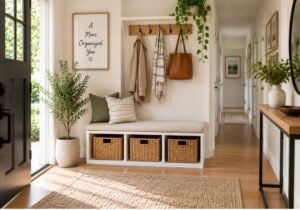
Keep these items organized:
- Shoes
- Keys
- Bags
- Jackets
Helpful solutions include a shoe rack, key holder, storage basket, and hooks for coats and bags.
A tidy entryway makes your home feel more organized and welcoming.
Step 9: Deal With Sentimental Items
Sentimental belongings are often the hardest things to declutter.
Photos, gifts, childhood items, and memories can have emotional value.
Instead of keeping everything, try these approaches:
Keep the Most Meaningful Items
Choose items that represent important memories rather than keeping every single object.
Create a Memory Box
A small box can hold your most special items without taking over your entire home.
Digitize Memories
Old photographs, letters, and documents can sometimes be scanned and saved digitally.
The goal is not to remove meaningful memories. The goal is to keep them in a way that does not create unnecessary clutter.
Step 10: Create Simple Storage Systems
After removing unnecessary items, organize the belongings you decided to keep.
Good storage systems should be:
- Easy to use
- Easy to maintain
- Suitable for your lifestyle
Helpful ideas:
Use Clear Containers
Clear storage boxes allow you to see what you have without opening every container.
Label Important Areas
Labels help family members know where items belong.
Store Similar Items Together
Examples:
- Cleaning supplies together
- Office supplies together
- Seasonal decorations together
A good system saves time because everything has a designated place.
For more practical ways to keep every room organized, explore our guide to [20 simple home organization ideas].
Common Decluttering Mistakes to Avoid
Many beginners struggle with how to declutter your home because they try to organize everything before creating a simple plan.
Trying to Do Everything in One Day
Large projects can quickly become overwhelming.
Instead, work for:
- 15 minutes daily
- One drawer at a time
- One category at a time
Small progress creates long-term results.
Buying Storage Before Decluttering
Many people purchase organizers before removing unnecessary items.
Storage products cannot solve a clutter problem if there are too many belongings.
Declutter first, then decide what storage solutions you actually need.
Keeping Items Because They Were Expensive
The money has already been spent. Keeping an unused item does not recover that cost.
Ask yourself:
“Does this item add value to my life today?”
Moving Clutter From One Room to Another
Sometimes people simply relocate clutter instead of removing it.
A successful decluttering process requires making final decisions.
Once you understand how to declutter your home, maintaining an organized space becomes much easier with simple daily habits.
How to Maintain a Decluttered Home
Decluttering is not a one-time activity. A few simple habits can help you maintain an organized home.
Follow the One-In, One-Out Rule
When you bring a new item home, consider removing an old one.
Example:
Buying a new shirt? Donate one you no longer wear.
Create a Daily Reset Routine
Spend 10 minutes each evening:
- Return items to their places
- Clear surfaces
- Organize commonly used areas
A small daily reset prevents clutter from building again.
Frequently Asked Questions
How do I start decluttering when I feel overwhelmed?
Start with a small area instead of the entire home. A single drawer, shelf, or cabinet is enough for your first project. Small wins help build motivation.
When learning how to declutter your home, starting with a small area can make the process feel easier and more achievable.
How long does it take to declutter a home?
The time depends on the size of your home and the amount of belongings you have. Some people finish in weeks, while others prefer a slower approach over several months.
What should I declutter first?
Start with easy areas such as drawers, expired products, kitchen items, and clothing you no longer use. Avoid starting with highly emotional items.
Should I throw away everything I do not use?
Not necessarily. Items that are useful, valuable, or meaningful can be kept. The goal is to remove unnecessary clutter, not to create an empty home.
How can I stop clutter from coming back?
Create simple habits such as returning items after use, avoiding unnecessary purchases, and doing regular home resets.
Final Thoughts
Final Thoughts
Decluttering your home does not need to happen all at once. Start with one small area, decide which belongings you truly need, and create practical storage systems for the items you keep.
Simple habits, such as returning items to their places and reviewing clutter regularly, can help you maintain an organized home over time.
The goal is not perfection or owning as little as possible. It is creating a comfortable space that supports your daily life.
5 thoughts on “How to Declutter Your Home”