
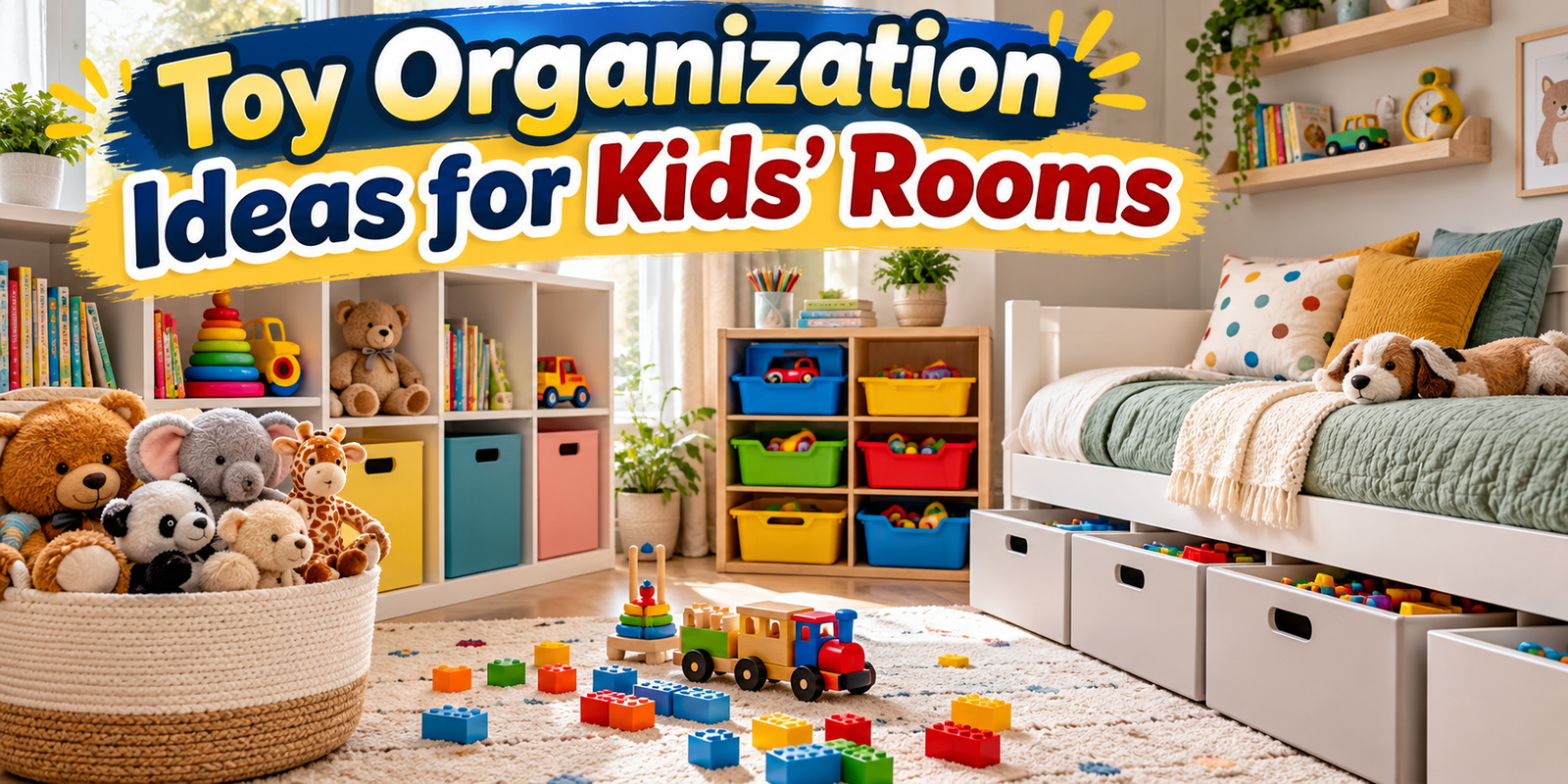
11 Smart Toy Organization Ideas for Kids’ Rooms That Actually Work
Keeping a child’s room organized can feel like a never-ending task. Toys seem to multiply quickly, and even a tidy room can become cluttered after just one afternoon of play. The good news is that you do not need a large room or expensive storage furniture to create a space where toys stay organized.
The right Toy Organization Ideas for Kids’ Rooms can make cleanup easier for parents and children while keeping favorite toys accessible. From simple baskets and labeled bins to under-bed storage and toy rotation, small changes can make a big difference.
The key is to create an organization system that is simple enough for children to understand and use themselves. When every toy has an obvious place, cleaning up becomes less frustrating and the room can stay tidy for longer.
Why Toy Organization Matters
A well-organized toy area does more than make a room look neat. It can make children feel more comfortable in their space and make it easier for them to find what they want to play with.
Too many toys scattered across the floor can make a room feel overwhelming. Children may also lose interest in toys simply because they cannot easily see or reach them.
Good Toy Organization Ideas for Kids’ Rooms focus on accessibility, simplicity, and consistency. Storage should match the child’s age and the way the room is actually used.
You can also combine toy organization with a general decluttering routine. If your home needs a bigger organization reset, our article about How to Declutter Your Home can be a useful place to start.
1. Use Open Toy Bins
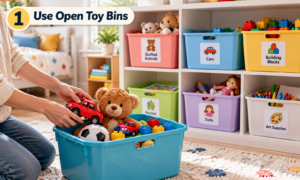
Open bins are one of the easiest Toy Organization Ideas for Kids’ Rooms because children can quickly see what is inside and put toys away without opening complicated drawers or containers.
Use separate bins for categories such as stuffed animals, building blocks, dolls, cars, puzzles, and art supplies.
Choose lightweight bins that children can safely move themselves. Keeping the most frequently used toys in easily accessible bins can also make everyday cleanup much faster.
2. Organize Toys by Category
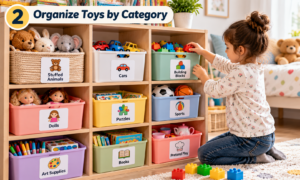
Instead of putting every toy into one large box, divide them into simple categories.
For example, keep cars together, stuffed animals together, building toys together, and pretend-play accessories together.
You do not need dozens of categories. Too many categories can actually make organization harder. Start with a few broad groups that make sense to your child.
This is one of the most practical Toy Organization Ideas for Kids’ Rooms because children can quickly learn where different toys belong.
3. Add Simple Labels
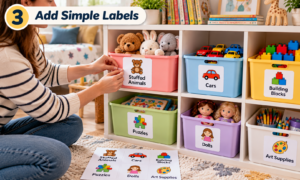
Labels can make toy storage much easier, especially when several bins look similar.
For younger children, use pictures along with words. A bin could have a picture of a car for vehicles, a teddy bear for stuffed animals, or colorful blocks for building toys.
Older children can use simple written labels.
The goal is not to make the room look like a storage facility. Labels should simply provide an easy visual reminder of where everything belongs.
4. Make Use of Under-Bed Storage
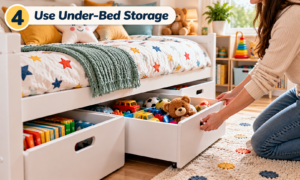
The space underneath a child’s bed is often overlooked.
Flat storage boxes or rolling containers can hold toys that are not used every day. This can include larger puzzles, seasonal toys, dress-up clothing, or collections that need to be kept together.
Under-bed storage is particularly useful in small bedrooms because it uses space that would otherwise remain empty.
Keep everyday favorites somewhere easier to reach and reserve under-bed storage for less frequently used items.
Choose containers that slide out easily without sharp edges, and avoid storing heavy items where a child could pull them down or hurt themselves while reaching underneath the bed.
5. Create a Toy Rotation System
Children do not necessarily need every toy available at the same time.
A simple toy rotation system involves keeping some toys stored away and bringing them back after a few weeks. You can rotate toys based on your child’s interests, the season, or the type of activity.
For example, outdoor toys can be stored during colder months while puzzles, books, and craft activities become more accessible.
Toy rotation can also make familiar toys feel new again without buying additional items.
6. Use Wall Storage
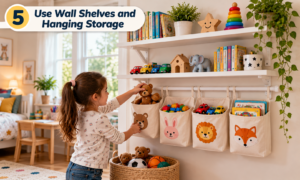
Walls can provide valuable storage without taking up much floor space.
Install child-safe shelves or storage units at an appropriate height for the child’s age. Shelves can hold books, small baskets, display items, or favorite toys.
For safety, make sure wall-mounted furniture is properly secured and avoid placing heavy objects where they could fall.
Wall storage works especially well in smaller bedrooms where floor space is limited.
Important Toy Storage Safety Tips
Choose storage solutions that match your child’s age and abilities. Keep small toys and detachable parts away from children who may put objects in their mouths, and follow the age recommendations on toy packaging.
If you use a toy box, choose one without a heavy hinged lid or make sure the lid has a suitable safety support. Avoid boxes that can trap a child inside, and keep plastic bags out of children’s play and storage areas.
Secure tall shelves, bookcases, dressers, and other heavy furniture to the wall using appropriate anti-tip hardware. Keep heavier items on lower shelves and place frequently used toys where children can reach them safely.
For more information, read the U.S. Consumer Product Safety Commission’s childproofing and furniture safety guidance.
7. Turn One Corner Into a Toy Station
Instead of spreading toys throughout the room, create a dedicated toy area.
Place a small shelf, a few bins, and a comfortable play mat in one corner. This creates a clear boundary between the play area and the rest of the bedroom.
A designated toy station can also make cleanup easier because children know exactly where most toys belong.
You can change the station as your child grows. A toddler’s toy corner may eventually become a reading, crafting, or homework area.
8. Use Closet Space for Larger Toys
Closets are not only for clothes.
You can use a small portion of the closet for larger toys, dress-up clothing, board games, stuffed animals, or seasonal items.
Hanging organizers can create additional compartments, while stackable containers can make use of vertical space.
Avoid placing heavy items high in the closet, especially in a child’s room. Frequently used items should remain at a safe and accessible height.
9. Keep Small Toys in Containers
Small toys can quickly create the most clutter.
Tiny cars, dolls’ accessories, building pieces, collectible toys, and craft materials can easily spread across the floor.
Use smaller containers inside larger storage areas to keep these pieces together.
Clear containers can be particularly helpful because children can see what is inside without opening every box.
For very young children, make sure small objects are age-appropriate and stored safely.
10. Create a Special Home for Stuffed Animals
Stuffed animals are adorable but can take up a surprising amount of space.
Instead of allowing them to cover the bed or floor, create a dedicated storage solution.
A large basket can work well for frequently used stuffed animals. A low shelf can display favorite ones, while a soft storage hammock can keep some animals off the floor.
You do not need to store every stuffed animal in the same way. Keep the favorites accessible and place less frequently used ones in larger storage.
11. Keep a Small Donation Box
One of the most useful long-term Toy Organization Ideas for Kids’ Rooms is keeping a small donation box or bag nearby.
When your child stops playing with a toy, outgrows something, or receives duplicates, place appropriate items into the box.
This prevents unused toys from slowly taking over the room.
Make decisions with your child when appropriate. Teaching children to recognize toys they no longer use can gradually help them understand the value of having an organized space.
How to Keep the Toy Room Organized
Creating an organization system is only the beginning. The system needs to be easy enough to maintain.
Try making cleanup part of the daily routine. A five-minute cleanup before bedtime can prevent toys from accumulating on the floor.
You can also encourage children to put one activity away before starting another. For example, puzzles can go back into their box before building blocks come out.
Do not expect perfection. A child’s bedroom is meant to be used and enjoyed. The goal is to create a manageable system rather than a room that always looks untouched.
If your family needs a broader daily routine, combining toy cleanup with a simple household cleaning schedule can make organization feel more manageable.
For more ideas, read our guide to creating a cleaning routine that keeps your home organized.
Tips for Organizing Toys in a Small Room
Small bedrooms require smarter use of available space.
Choose furniture that provides storage as well as another function. A storage bench, bed drawers, shelving unit, or desk with compartments can help maximize the room.
Use vertical space whenever possible. Shelves and wall organizers can keep items off the floor while leaving more room for playing.
Avoid filling every available space with storage containers. Too much storage can encourage unnecessary accumulation. Instead, regularly check whether your child still uses everything in the room.
Another helpful strategy is to keep the most frequently used toys within easy reach and move occasional-use toys to higher or less accessible storage.
When organizing a child’s room, it is also important to consider age-appropriate toy safety and storage. Parents can review toy safety tips from the American Academy of Pediatrics for additional guidance.
Make Cleanup Easy for Kids
One of the biggest mistakes parents make is creating an organization system that works for adults but is too complicated for children.
If a child has to open several boxes, move furniture, or sort dozens of tiny categories before putting away one toy, cleanup quickly becomes frustrating.
Keep the system simple.
Large categories, accessible containers, picture labels, and open shelves can help children participate in cleaning up their own room.
You can even turn cleanup into a short routine. Set a timer for five minutes and encourage children to see how much they can put away before the timer ends.
The goal is to make organization a normal part of play rather than a major chore.
When Should You Declutter Toys?
There is no need to wait until the room becomes completely overcrowded.
A quick toy review every few months can help keep the collection manageable. Look for toys that are broken, missing important pieces, outgrown, duplicated, or no longer used.
Seasonal changes can also be a convenient time to review toys.
When new toys come into the home, consider whether older unused toys should be donated or stored away. This simple habit can prevent the amount of clutter from continuously increasing.
Final Thoughts
The best Toy Organization Ideas for Kids’ Rooms are not necessarily the most expensive or complicated. A few well-chosen bins, simple labels, accessible shelves, and a consistent cleanup routine can completely change how a child’s room feels.
Start with the areas that create the most clutter. Organize toys into broad categories, make frequently used items easy to reach, and use hidden spaces such as under the bed and inside closets.
Most importantly, create a system that your child can actually use. When children understand where their toys belong and can reach their storage independently, maintaining an organized room becomes much easier.
A tidy children’s room does not have to mean a perfectly clean room every minute of the day. The goal is to create a comfortable, functional space where children can play freely, find their favorite toys easily, and learn simple organization habits along the way.