
10 Smart Kitchen Storage Ideas to Create a More Organized Space
Introduction:
A well-organized kitchen can make everyday life much easier. When cabinets are overflowing, drawers are packed with utensils, and countertops are covered with appliances, even preparing a simple meal can become frustrating. The good news is that you do not need a huge kitchen or an expensive renovation to create a more functional space.
The right kitchen storage system can help you make better use of cabinets, drawers, walls, countertops, and even overlooked spaces such as the inside of cabinet doors. The goal is not to hide everything away. Instead, it is to create simple storage systems that make frequently used items easy to find, use, and return to their proper place.
These ten practical kitchen storage ideas can help you reduce clutter and create a more functional space, whether you have a spacious family kitchen or a small apartment kitchen.
1. Organize Kitchen Drawers by Purpose
Kitchen drawers can quickly become cluttered when different types of utensils are stored together. Instead of using drawers as general storage spaces, give each drawer a specific purpos.
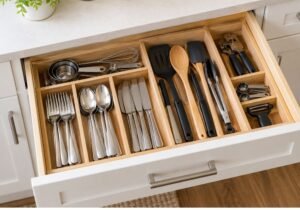
Use adjustable drawer dividers or small organizers to separate forks, spoons, knives, measuring tools, bottle openers, and other small items. Cooking utensils such as spatulas, wooden spoons, and tongs can have their own drawer near the stove.
Before buying organizers, empty the drawer completely. Remove duplicate or damaged utensils and anything you rarely use. Measure the drawer before purchasing inserts so you do not end up with organizers that waste valuable space.
2. Use Shelf Risers to Maximize Cabinet Space
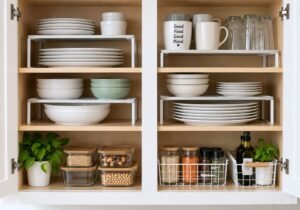
Kitchen cabinets often have more vertical space than we actually use. You may have a stack of plates sitting at the bottom of a tall cabinet while the space above them remains empty.
Shelf risers can solve this common kitchen storage problem by creating an additional level inside the cabinet.
Use them to separate dinner plates from smaller plates, organize mugs above bowls, or create additional space for pantry products.
This approach also prevents you from creating extremely tall stacks. Instead of removing several dishes just to reach one plate at the bottom, you can access each category more easily.
Before adding shelf risers, measure the height and depth of your cabinets. Choosing storage products based on the actual dimensions of your kitchen helps you use the available space efficiently.
3. Create Simple Kitchen Zones
One of the easiest ways to make a kitchen more functional is to organize items according to where and how you use them.

Think of your kitchen as several small work zones.
For example, create a cooking zone near the stove with pots, pans, cooking utensils, and commonly used seasonings. Your baking zone might contain mixing bowls, measuring cups, baking sheets, and baking ingredients.
If your family drinks coffee every morning, create a small coffee station where the machine, mugs, coffee, and other supplies are stored together.
The same idea works for food preparation, cleaning supplies, and lunch-packing essentials.
Creating zones reduces unnecessary movement around the kitchen and makes it much easier for everyone in the household to know where things belong.
4. Keep Kitchen Countertops as Clear as Possible
Countertops provide valuable workspace, but they can easily become storage areas for appliances, mail, containers, groceries, and random household items.

A simple rule is to keep only things you use regularly on your countertops.
For example, if you use your coffee maker every morning, keeping it on the counter makes sense. An appliance you use once every few weeks can probably be stored inside a cabinet.
Group the few items that remain on your counter rather than spreading them across the entire surface. A small tray can keep frequently used cooking oils or seasonings together while making the area look intentional.
Regular cleaning is also an important part of maintaining a healthier home environment. You can learn more from the EPA’s Healthy Indoor Environments guidance.
Clear counters also make wiping down the kitchen much faster. You will not have to move several objects every time you clean.
Effective kitchen storage also means keeing unnecessary items away from your countertops.
5. Take Advantage of Cabinet Door Storage
The inside of cabinet doors is one of the most overlooked kitchen storage opportunities.

Depending on the size and design of your cabinets, small racks, hooks, or lightweight organizers can provide additional storage without taking up shelf space.
They can be useful for storing measuring spoons, pot lids, lightweight cleaning supplies, or other small kitchen essentials.
However, avoid adding anything too heavy. Make sure an organizer does not prevent the cabinet door from closing or interfere with items stored on the shelves.
Kitchen Storage Safety Tip: Store cleaning products separately from food, dishes, and food-preparation surfaces. Keep them in their original labeled containers, follow the label instructions, and place them out of reach of children and pets. Never mix cleaning products, as some combinations can release toxic gases.
For more guidance, see the U.S. Environmental Protection Agency’s advice on household cleaning products.
6. Organize Dry Foods Into Clear Categories
A pantry or food cabinet becomes difficult to manage when groceries are placed wherever there happens to be an empty space.
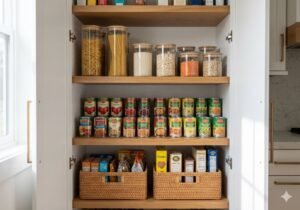
Instead, divide your food storage into clear categories. You might create sections for breakfast foods, snacks, canned goods, pasta and grains, baking ingredients, and meal-preparation staples.
Clear containers can be helpful for frequently used dry foods such as rice, pasta, oats, or flour, but you do not need to transfer every grocery item into a new container.
Arrange products so that you can easily see what you have. When possible, move older products toward the front and place newer purchases behind them.
7. Use Vertical Kitchen Storage
When cabinets and drawers are limited, look at unused vertical areas.

Open wall shelves can hold attractive everyday dishes or frequently used jars. Hooks may work for mugs or lightweight utensils. A suitable wall-mounted rack can also provide additional storage in the right kitchen.
The sides of cabinets or other unused surfaces may provide additional opportunities depending on your kitchen layout.
The key is moderation. Covering every wall with storage can make a small kitchen feel crowded instead of organized.
Choose one or two vertical storage solutions that solve an actual problem rather than filling an empty wall just because the space is available.
Before installing wall shelves or racks, check the wall type, use suitable fixings for the expected load, and follow the manufacturer’s installation instructions. Store heavy items on secure, lower shelves where practical, and avoid overloading hooks or racks.
8. Give Your Refrigerator a Simple Organization System
The refrigerator is part of your overall kitchen organization, so it should follow the same principle: similar items should have a predictable place.
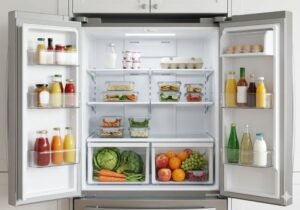
Instead of placing groceries wherever they fit, create simple categories that work for your household.
For example, you might keep yogurt and other breakfast items together, create a designated area for snacks, and use appropriate drawers for produce.
Avoid overfilling the refrigerator. When shelves are packed tightly, it becomes harder to see what you already have and easier to forget food at the back.
For a complete refrigerator system, see our guide on How to Organize Your Refrigerator for a Cleaner Kitchen.
9. Make Awkward Spaces More Useful
Many kitchens contain spaces that are technically available but difficult to use. Deep cabinets, narrow gaps, corners, and the area under the sink are common examples.

Instead of ignoring these spaces, choose storage solutions based on the specific problem.
A turntable can make bottles or jars in a deep cabinet easier to reach. Pull-out baskets can improve access to items stored toward the back. Upright dividers can help organize baking sheets, cutting boards, and trays without stacking them.
Under the sink, small bins can keep cleaning supplies grouped together while leaving necessary plumbing accessible.
10. Declutter Before Adding More Storage
Sometimes you do not actually need more kitchen storage. You simply need fewer items competing for the space you already have.
As you work through each area, look for duplicate utensils, chipped dishes, food-storage containers without matching lids, expired pantry items, and appliances you rarely use. Keep the items that support your normal routine and remove the ones that are simply taking up useful space.
Items in good condition that you genuinely do not need may be donated where appropriate. Damaged or unusable items can be discarded or recycled according to local guidelines.
Common Kitchen Storage Mistakes to Avoid
A good organization system should make everyday life simpler, not create more work.
One common mistake is buying storage containers before measuring cabinets and drawers. Another is purchasing dozens of matching containers simply for appearance without considering whether they actually improve functionality.
As a practical test, you should be able to take out a frequently used item without first removing several other things. If you cannot, that cabinet probably needs fewer items or a simpler arrangement.
Avoid storing frequently used objects in inconvenient locations just because they fit there. Everyday items should generally be the easiest to access.
How to Keep Your Kitchen Organized
Once your kitchen is organized, a few small habits can help prevent clutter from building up again.
Return items to their designated places after using them. Spend a few minutes clearing the counters at the end of the day. Check the refrigerator before buying more groceries, and review pantry products regularly.
During that quick check, remove anything that has ended up in the wrong place, match containers with their lids, and move rarely used items away from the easiest-to-reach spots.
The goal is not to maintain a perfectly styled kitchen every minute of the day. A successful organization system should make it easy to reset the space after normal daily use.
Final Thoughts
An organized kitchen is less about having more space and more about using the space you already have thoughtfully.
For more ways to simplify your home, explore our 20 Simple Home Organization Ideas.
Pick the one area that slows you down most during cooking or cleanup, fix that first, and use the kitchen normally for a few days before deciding what needs to change next.
Most importantly, choose organization systems that fit your real daily routine. When every frequently used item has a logical home, keeping your kitchen cleaner and more organized becomes much easier.
The best organization system is one your household can realistically maintain every day.
2 thoughts on “10 Smart Kitchen Storage Ideas”