

10 Benefits of Morning Exercise: Why a Morning Workout Can Improve Your Day
Starting your day with movement can be one of the simplest ways to build a healthier daily routine. You do not need an expensive gym membership or a long workout. Even a short walk, stretching session, bodyweight workout, or light cycling can help you become more active.
The benefits of morning exercise go beyond burning calories. Regular physical activity can support cardiovascular health, mood, sleep, energy, strength, and overall fitness. Exercising early can also make it easier to protect workout time before work, school, family responsibilities, or other activities take over your day.
The key is consistency. A 10–20 minute routine that you can maintain regularly may be more practical than an intense workout that you only do occasionally.
For more practical sleep tips, check out our How to Build a Better Sleep Routine for More Restful Nights guide.
1. Helps You Start the Day Actively
One of the simplest benefits of morning exercise is that it gets your body moving soon after you wake up.
After several hours of sleep, gentle movement can help you transition into your day. A brisk walk, mobility routine, light stretching, or a few bodyweight exercises can be enough to get started.
You do not have to exercise intensely. The goal is simply to create an active beginning to your morning.
Try starting with:
- 5 minutes of walking
- 10 bodyweight squats
- Gentle shoulder rolls
- Light stretching
- 10–15 minutes of cycling
- A short beginner workout
2. May Improve Your Mood
Physical activity is associated with positive effects on mood and emotional well-being. Exercise can be a useful part of a healthy routine when you want to begin the day feeling mentally refreshed.
A morning walk outside can be particularly enjoyable because it combines physical activity with fresh air and a change of environment.
If you often wake up feeling sluggish, try starting with just 10 minutes instead of expecting yourself to complete a long workout.
3. Can Support Better Focus

Another potential benefit of morning exercise is that physical activity can help you feel more alert and ready to concentrate.
This can be useful if your morning includes work, studying, meetings, or other tasks requiring attention.
You could try a short routine before sitting down at your desk:
2 minutes: gentle stretching
3 minutes: brisk walking
3 minutes: bodyweight movements
2 minutes: slow breathing and cooldown
The routine is short enough to fit into many busy schedules.
4. Helps Build a Consistent Exercise Habit
One of the most practical benefits of morning exercise is that it can make exercise easier to schedule.
When you postpone your workout until later, unexpected responsibilities can easily interfere. Morning exercise allows you to complete your planned activity before many of the day’s distractions begin.
A simple rule can help:
Make the workout small enough that you can realistically repeat it.
Instead of saying, “I must exercise for one hour every morning,” start with:
“I will move for 10 minutes after breakfast or after waking up.”
Once that habit becomes consistent, you can gradually increase the duration.
5. Supports Cardiovascular Health
Regular physical activity is an important part of maintaining cardiovascular health.
You can learn more about the health benefits of physical activity from the CDC. For more ways to stay active, read our guide to the benefits of regular exercise.
Activities such as brisk walking, cycling, swimming, jogging, and aerobic exercise can increase your heart rate and contribute to overall fitness.
You don’t need to perform high-intensity exercise every morning. Moderate activity performed regularly can be a practical starting point for many adults.
If you have a medical condition or have been inactive for a long time, speak with a healthcare professional about an appropriate exercise level before starting a demanding routine.
6. Can Support Healthy Weight Management
Exercise uses energy and can contribute to maintaining a healthy body weight when combined with appropriate nutrition and overall lifestyle habits.
However, morning exercise is not a magic fat-burning solution. The time of day you exercise is less important than choosing a routine you can perform consistently.
For example, a 30-minute morning walk that you do regularly may be more useful for your lifestyle than an intense workout that you rarely complete.
For healthy weight management, focus on the bigger picture:
- Regular physical activity
- Balanced meals
- Adequate sleep
- Reasonable portions
- Consistent daily habits
7. May Help You Sleep Better
Regular physical activity is associated with better sleep for many people.
Creating a consistent morning exercise routine may also help establish a predictable daily schedule. A morning walk or workout can become part of a broader routine that includes regular wake-up and bedtime times.
If exercising late in the evening makes it harder for you to relax, moving some of your activity to the morning may be worth trying.
Remember that sleep quality depends on many factors, including stress, caffeine, screen habits, environment, and bedtime consistency.
8. Helps Reduce Daily Stress
Exercise can be a useful tool for managing everyday stress.
A morning workout gives you a few minutes away from emails, notifications, household tasks, and other responsibilities.
You can make this time more relaxing by choosing activities such as:
- Walking
- Yoga
- Stretching
- Light cycling
- Mobility exercises
- Breathing exercises
You don’t need to turn every morning into a difficult workout. Sometimes a calm 15-minute walk is exactly what you need.
9. Can Improve Strength and Mobility
Morning exercise does not have to mean running or cardio.
A balanced routine can include simple strength and mobility exercises that help you build physical fitness over time.
For beginners, try:
- Squats
- Wall push-ups
- Glute bridges
- Standing lunges
- Bird dogs
- Calf raises
- Gentle hip stretches
- Shoulder mobility exercises
Start with controlled movements rather than trying to complete as many repetitions as possible.
10. Gives You More Free Time Later
Another practical benefit of morning exercise is simply getting it done early.
Once your workout is finished, you don’t have to worry about fitting it between work, errands, family activities, or social plans.
This can be especially useful for people whose schedules become unpredictable during the afternoon and evening.
A short morning workout can give you a sense of accomplishment before the rest of your day begins.
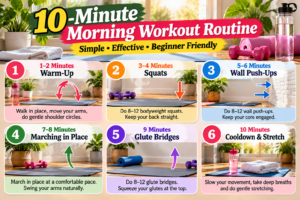
A Simple 10-Minute Morning Exercise Routine

You don’t need a complicated program to experience the benefits of morning exercise.
Try this beginner-friendly routine:
Minute 1–2: Warm-Up
Walk slowly around the room or march gently in place. Add shoulder circles and gentle arm movements.
Minute 3–4: Squats
Perform 8–12 comfortable bodyweight squats. Keep your movements controlled and use a chair for support if needed.
Minute 5–6: Wall Push-Ups
Stand facing a wall and perform 8–12 wall push-ups.
Minute 7–8: Marching
March in place at a comfortable pace. Swing your arms naturally.
Minute 9: Glute Bridges
If you’re comfortable getting on the floor, perform 8–12 glute bridges.
Minute 10: Cooldown
Slow your movement and take several comfortable breaths. Finish with gentle stretching.
If any movement causes pain, stop and choose an easier alternative.
What Should You Drink Before Morning Exercise?
For most short, light workouts, water is a simple choice.
Drink some water after waking up, particularly if you feel thirsty. If you’re exercising for longer or sweating heavily, your hydration needs may be greater.
You don’t necessarily need a special sports drink for a short 10-minute workout.
Should You Eat Before Morning Exercise?
It depends on the person and the type of workout.
For a short, low-intensity session, some people are comfortable exercising without eating first. Others feel better after having a small snack.
Possible light options include:
- A banana
- A small portion of yogurt
- A piece of fruit
- Toast with a small amount of nut butter
- A small serving of oatmeal
If you feel dizzy, weak, or unwell while exercising, stop and reassess your routine. People with diabetes or other medical conditions may have specific nutrition and medication considerations and should follow their healthcare professional’s advice.
Common Morning Exercise Mistakes
Even with all the potential benefits of morning exercise, your routine should be realistic and safe.
Skipping the Warm-Up
Going directly into intense exercise after waking up may not feel comfortable. Start with several minutes of easy movement.
Doing Too Much Too Soon
You don’t need a difficult workout on your first morning. Start gradually and increase your activity over time.
Focusing Only on Calories
Exercise provides benefits beyond calorie expenditure. Fitness, strength, mobility, mood, cardiovascular health, and daily activity all matter.
Ignoring Pain
Normal exercise effort and pain are not the same thing. Stop an exercise that causes sharp or unusual pain.
Sacrificing Sleep
Getting up extremely early is not useful if you’re consistently cutting your sleep short. A healthy routine should include adequate rest.
Exercise Safely in the Morning
Start with a comfortable warm-up and increase the intensity gradually. Drink water when needed, and stop exercising if you feel chest pain, faintness, severe shortness of breath, or sudden unusual symptoms. Seek urgent medical help for serious or persistent symptoms.
If you have a chronic health condition, are returning to exercise after a long period of inactivity, or are unsure which activities are suitable for you, ask a qualified healthcare professional for personalized advice.
How to Make Morning Exercise a Daily Habit
For general guidance, U.S. adults should aim for at least 150 minutes of moderate-intensity aerobic activity each week, along with muscle-strengthening activities on at least two days. You can build toward these goals gradually, and shorter sessions count toward your weekly total. Choose activities that match your fitness level and health needs.
See the CDC’s adult physical activity recommendations for more details.
Use this simple weekly system:
Monday: 15-minute brisk walk
Tuesday: 10-minute strength routine
Wednesday: 15-minute walk + stretching
Thursday: 10-minute strength routine
Friday: 20-minute walk
Saturday: Light cycling, walking, or another enjoyable activity
Sunday: Rest or gentle stretching
The goal isn’t perfection. If you miss a day, simply return to your routine the next day.
Make Your Morning Workout Easier
Prepare everything the night before.
Put your workout clothes, shoes, water bottle, and exercise mat where you can easily see them.
You can also use the 10-minute rule:
If you don’t feel motivated, promise yourself that you’ll exercise for only 10 minutes.
After 10 minutes, you can stop if you still don’t want to continue. Often, starting is the hardest part.
Frequently Asked Questions
Is morning exercise better than evening exercise?
Not necessarily. The best exercise time is generally the one that fits your schedule and allows you to exercise consistently. Morning workouts can be convenient for people who prefer completing exercise early.
How long should I exercise in the morning?
If you’re a beginner, 10–20 minutes is a reasonable starting point. You can gradually increase your activity as your fitness and schedule allow.
Can I exercise every morning?
Many people can include some form of movement every morning, but the intensity should vary. Rest and recovery are important, especially after challenging strength or high-intensity workouts.
Can morning exercise help with weight loss?
Exercise can contribute to weight management, but weight changes depend on overall energy intake, activity, sleep, and other factors. Exercising in the morning itself does not guarantee weight loss.
What is the best morning exercise for beginners?
Walking, gentle stretching, mobility exercises, bodyweight movements, and beginner-level strength exercises are practical options. Choose movements appropriate for your current fitness level.
Final Thoughts
The benefits of morning exercise aren’t about finding a perfect workout or waking up at an extremely early hour. They’re about creating a sustainable habit that gets your body moving and gives you a positive start to the day.
Start small. Even 10 minutes of walking, stretching, or beginner strength exercises can help you build the habit. As your routine becomes easier, you can gradually increase the duration or intensity.
The most important goal is consistency. Choose an activity you enjoy, prepare for it the night before, and make your morning workout simple enough that you can keep doing it.
Your best morning routine is not necessarily the longest one—it’s the one you can realistically maintain.