
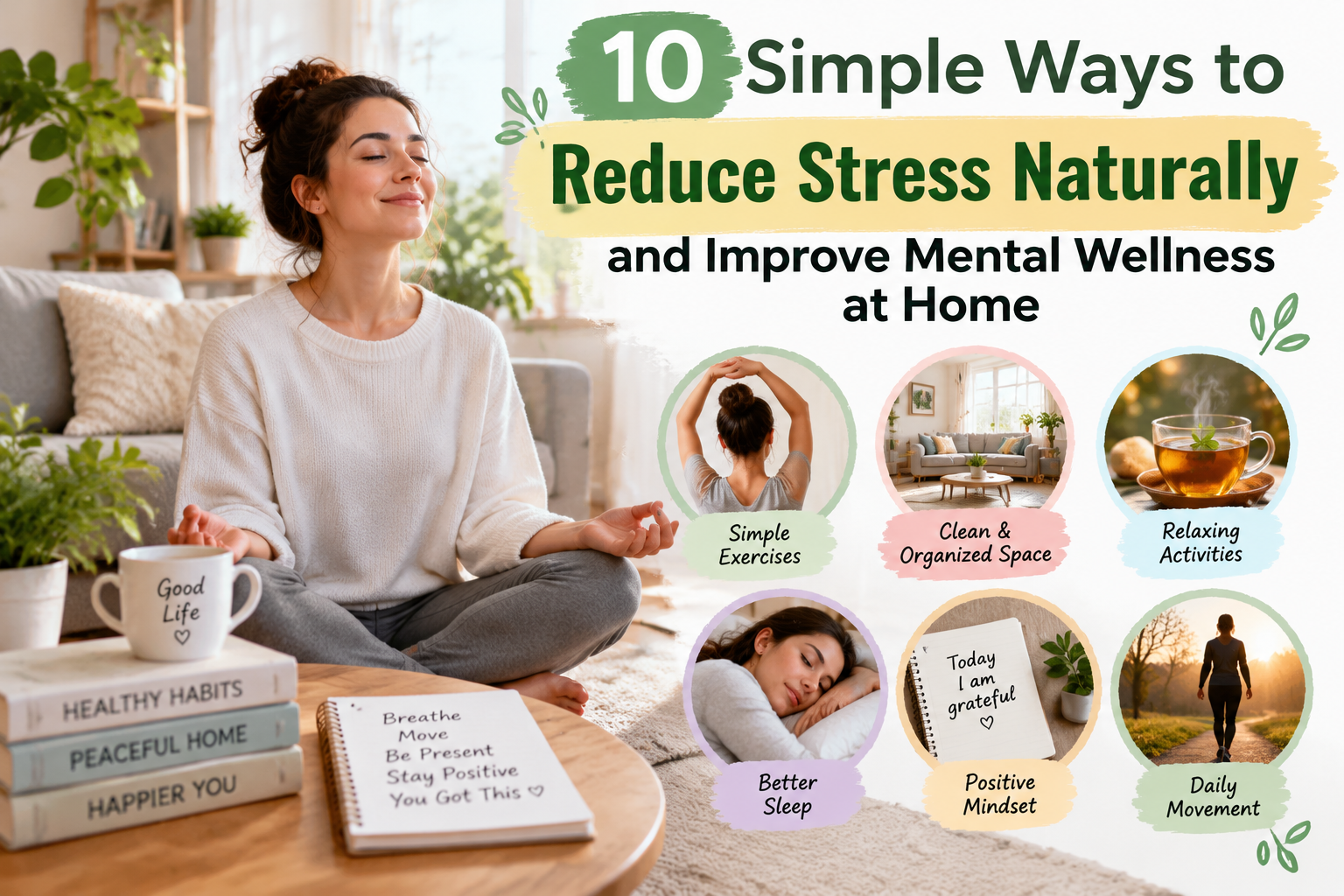
10 Simple Ways to Reduce Stress Naturally and Improve Mental Wellness at Home
Daily life can feel overwhelming when work, household responsibilities, screen time, and constant notifications compete for your attention. These 10 simple ways to reduce stress naturally can help you build a calmer routine and support your mental wellness at home.
You do not need expensive equipment, complicated routines, or major lifestyle changes to create a more peaceful home environment. Simple habits such as deep breathing, gentle movement, better sleep routines, spending time with supportive people, and reducing clutter can make your day feel more manageable.
This guide explains 10 practical ways to reduce stress naturally at home, from slow breathing and gentle movement to better sleep habits and creating a more comfortable living space.
1. Practice Slow Deep Breathing
Slow breathing can be a simple way to create a calm pause during a busy day. When you feel tense or mentally overloaded, taking a few controlled breaths may help you slow down and refocus.
Sit in a comfortable position and relax your shoulders. Breathe in gently through your nose, pause briefly, and breathe out slowly. Repeat this for a few minutes without forcing your breathing.
You can practice this in the morning, before bedtime, or whenever you need a short break.
Try This Simple Routine
Take a comfortable seat, place your feet on the floor, and focus on slow breathing for two to five minutes. Keep the routine simple so it is easy to repeat every day.
2. Take a Short Walk Every Day
Walking is one of the easiest forms of movement to add to your routine. You do not need a gym membership or special equipment.
A short walk around your home, garden, street, or nearby park can give you a break from sitting and help you change your surroundings for a few minutes.
If you spend long hours working at a desk, try standing up and walking for a few minutes every hour or two.
You can also make walking more enjoyable by listening to calming music, a podcast, or simply paying attention to your surroundings.
You can also explore our guide to the benefits of regular exercise for more ideas on adding movement to your daily routine.
3. Add Gentle Stretching to Your Routine
Sitting for long periods can leave your neck, shoulders, back, and legs feeling stiff. Gentle stretching may help you feel more comfortable and relaxed.
Simple movements can include:
Reaching your arms overhead
Rolling your shoulders slowly
Gently turning your head from side to side
Stretching your calves and legs
Standing and reaching toward the ceiling
Avoid forcing any movement or stretching through pain. The goal is to move gently and comfortably.
Easy Morning Stretch
Spend three to five minutes stretching after waking up. This can help you transition into the day without rushing.
4. Keep Your Home Organized and Comfortable
Your environment can affect how you feel throughout the day. A room filled with clutter may feel distracting, while a cleaner and more organized space can make everyday tasks easier.
You do not need to organize your entire home at once. Start small.
Choose one drawer, one shelf, or one corner and spend ten minutes improving it. Small improvements are usually easier to maintain than large cleaning sessions.
You can also read our guide on How to Declutter Your Home for practical organization ideas.
A calmer home environment does not mean your home has to look perfect. The goal is simply to create spaces that feel comfortable and easy to use.
5. Take Regular Breaks From Screens
Phones, social media, emails, and notifications can make it difficult to switch off mentally.
Try creating short periods during the day when you are not using a phone, tablet, television, or computer.
During that time, you could:
Drink tea or water
Read a few pages of a book
Sit outdoors
Stretch
Talk with a family member
Do a simple household task
Even a short screen-free break can help create a more balanced routine.
For more practical ideas, read the CDC’s guide to managing stress, which covers healthy coping habits, relaxation, physical activity, and social connection.
Simple Digital Break Idea
Choose one daily activity, such as breakfast or your evening tea, and keep your phone away during that time.
6. Listen to Music That Helps You Relax
Music can change the atmosphere of a room and make everyday activities more enjoyable.
You might enjoy soft instrumental music while reading, calm background music while cooking, or familiar songs while completing household tasks.
Different people find different types of music relaxing, so choose what feels comfortable for you.
You can create a short playlist specifically for quiet evenings, cleaning, reading, or bedtime preparation.
7. Build a Consistent Sleep Routine
Sleep plays an important role in overall wellbeing and daily energy.
Try going to bed and waking up at similar times each day. A consistent routine can make it easier to prepare your body for rest.
Helpful bedtime habits may include:
Dimming bright lights in the evening
Reducing screen use before bed
Keeping the bedroom comfortable
Avoiding heavy meals very late at night
Creating a quiet wind-down routine
The CDC’s healthy sleep guidance explains how consistent sleep habits can support overall health and well-being.
If you regularly struggle with sleep or feel unusually tired during the day, consider discussing it with a qualified healthcare professional.
For more tips, read our guide on building a better sleep routine.
8. Spend Time With Supportive People
Healthy relationships can be an important part of emotional wellbeing.
Spending time with family members or friends can give you an opportunity to talk, laugh, share meals, or simply enjoy company.
You do not need to plan something complicated. Simple activities can include:
Having tea together
Eating dinner without phones
Taking a short walk
Playing a board game
Talking about your day
Watching a favorite show together
Meaningful social connection can help make everyday life feel less isolating.
9. Practice Gratitude in a Simple Way
Gratitude does not require a complicated journal or long daily routine.
You can simply write down one to three things you appreciated during the day.
These can be small things, such as:
A peaceful morning
A helpful conversation
Finishing a task
Spending time outdoors
Enjoying a favorite meal
The purpose is not to ignore difficulties. It is simply to notice positive moments that might otherwise be overlooked.
Easy Gratitude Habit
Keep a small notebook near your bed and write one positive moment before going to sleep.
10. Make Time for Hobbies You Enjoy
Hobbies can provide a useful break from daily responsibilities.
Choose activities that genuinely interest you instead of following trends or forcing yourself to enjoy something.
Relaxing hobbies may include:
Reading
Gardening
Cooking
Painting
Photography
Knitting
Writing
Baking
Puzzles
Learning a new skill
Even fifteen to thirty minutes can be enough to enjoy a hobby without adding pressure to your schedule.
Easy Exercises You Can Do at Home
You do not need a complicated workout routine to add more movement to your day.
Morning Stretching
Start with a few gentle movements to loosen your shoulders, back, and legs.
Walking in Place
Walking in place can be useful when the weather is poor or you prefer to stay indoors.
Neck and Shoulder Movements
Slow shoulder rolls and gentle neck movements can be helpful after long periods of sitting.
Light Yoga-Inspired Movements
Simple yoga-style stretches can be a relaxing addition to your routine, as long as they feel comfortable for your body.
Always stop if a movement causes pain or discomfort.
How to Create a More Peaceful Home Environment
A peaceful home does not have to be perfectly decorated or completely silent.
When you want to reduce stress naturally at home, start with small changes that make your surroundings more comfortable and your daily routine easier to manage.
You can:
- Keep frequently used areas tidy
- Let in natural light when possible
- Open windows for fresh air when appropriate
- Add plants or flowers
- Create a quiet reading corner
- Reduce unnecessary clutter
- Keep daily routines simple
- Store frequently used items where they are easy to reach
Try changing one area at a time instead of trying to improve everything at once.
Common Mistakes to Avoid
One common mistake is trying to change too many habits at the same time.
If you suddenly add exercise, journaling, meditation, meal planning, decluttering, and a new sleep schedule, the routine may become difficult to maintain.
Start with one or two small habits.
Another mistake is comparing your routine with someone else’s. What feels relaxing for one person may not work for another.
Choose habits that fit your schedule, home, energy level, and lifestyle.
Frequently Asked Questions
How can I reduce stress naturally at home?
You can try simple habits such as slow breathing, gentle movement, regular walks, better sleep routines, screen breaks, hobbies, and keeping your home more organized.
How long should I practice relaxation activities?
There is no single perfect amount of time. Even five to ten minutes can be a useful starting point if that fits your routine.
Can keeping my home organized help me feel calmer?
A more organized space may help some people feel less distracted and make everyday tasks easier. You do not need a perfect home; simple organization is often enough.
What are some easy relaxing exercises?
Gentle stretching, walking, light yoga-inspired movements, and slow breathing are simple options that can be done at home.
Should I avoid screens completely?
No. The goal is not to remove technology from your life. Short screen-free periods can simply help create more balance during the day.
What if stress feels difficult to manage?
If stress is persistent, affects your sleep or daily life, or feels overwhelming, consider speaking with a qualified healthcare or mental health professional for appropriate support.
Potential Benefits of Healthy Daily Habits
Simple wellness habits may help you create a more balanced routine and make more time for rest, movement, and personal activities.
They may also support:
- A calmer daily schedule
- Better organization
- More consistent sleep habits
- Regular physical activity
- Stronger social connections
- More time for hobbies and relaxation
These habits are not a replacement for professional care when it is needed, but they can be useful parts of a healthy lifestyle.
Conclusion
Reducing everyday stress does not require a complete lifestyle transformation.
You can reduce stress naturally at home by choosing realistic habits that fit your schedule and repeating them consistently rather than trying to change everything at once.
Small habits such as slow breathing, short walks, gentle stretching, better organization, screen breaks, quality sleep, meaningful relationships, gratitude, and hobbies can help create a calmer routine.
The best approach is to start with one simple habit that feels realistic for you.
You might begin by taking a ten-minute walk, organizing one small area of your home, or putting your phone away during dinner.
Over time, small and manageable changes can help you build a more peaceful and balanced daily routine.