
Banana and Apricot Soufflé Recipe
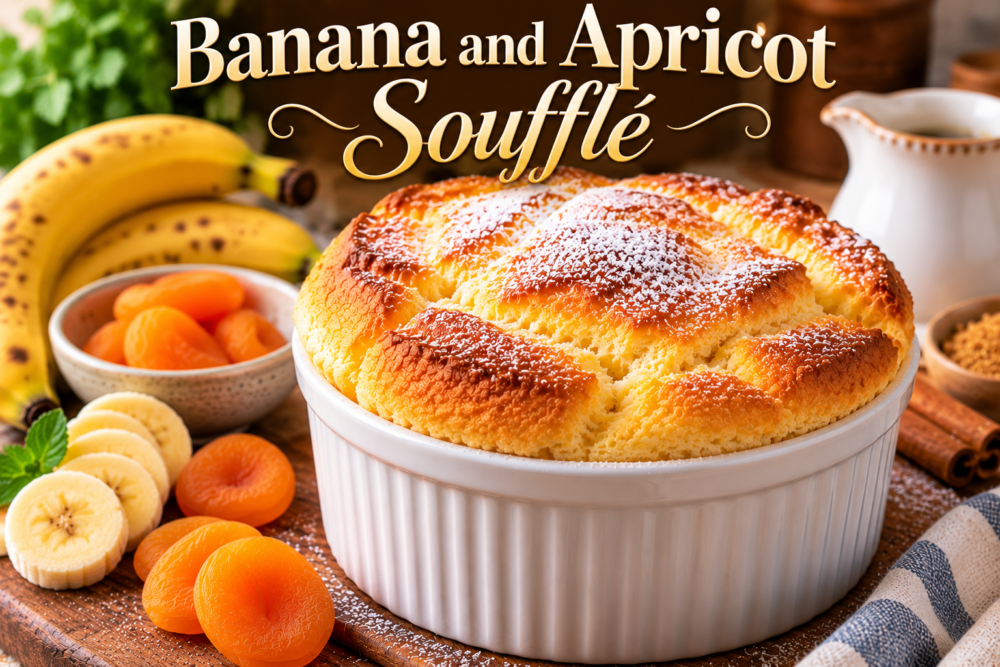
This Banana Soufflé combines ripe bananas, apricots, lemon juice, and warm spices in a light baked dessert with a soft, airy texture. The bananas provide natural sweetness and a creamy fruit base, while apricots add a slightly sharper fruity flavor that keeps the dessert from tasting one-dimensional.
Although soufflés can seem difficult, the method becomes much easier when you understand the two stages that matter most: preparing a smooth, thick base and preserving the air in the whisked egg whites. The egg whites should be folded into the mixture gently rather than vigorously stirred.
This Banana and Apricot Soufflé is best served straight from the oven, when it is risen, golden, and still warm.
Prep Time: 15 minutes
Cook/Bake Time: 30–35 minutes
Total Time: 45–50 minutes
Oven:200°C / 400°F / Gas 6
Servings:4
Ingredients
- 2 ripe bananas
- 50 g (2 oz) dried apricots that do not require soaking
- 1 × 15 ml spoon / 1 tbsp lemon juice
- 25 g / 1 oz light brown muscovado sugar
- ¼ × 5 ml spoon / ¼ tsp ground cinnamon
- ¼ × 5 ml spoon / ¼ tsp ground allspice
- 25 g / 1 oz polyunsaturated margarine
- 25 g / 1 oz plain wholemeal flour
- 150 ml / 5 fl oz skimmed milk
- 2 egg yolks
- 3 egg whites
- Icing sugar, to sprinkle (optional)
Instructions
1. Prepare the Fruit Purée
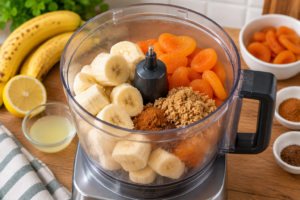
Place the bananas, apricots, lemon juice, sugar and spices in a food processor and process until puréed.
Try to achieve a reasonably smooth consistency so the fruit distributes evenly through the Banana Soufflé mixture.
2. Prepare the Base
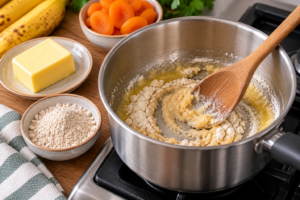
Place the margarine in a saucepan and heat gently to melt. Stir in the flour and cook for 1 minute.
Keep the heat controlled so the mixture cooks without becoming excessively browned.
3. Add the Milk
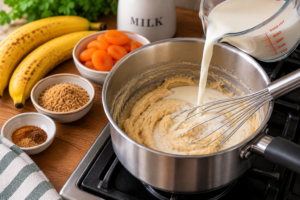
Remove from the heat and gradually stir in the milk. Bring to the boil, stirring continuously until thickened. Simmer for 1½ minutes.
Adding the milk gradually and stirring continuously helps produce a smoother base.
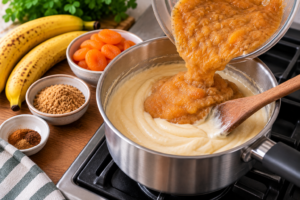
4. Add the Fruit and Eggs
Stir in the banana purée and egg yolks.
In a separate clean bowl, whisk the egg whites until stiff.
Gently fold the whisked egg whites into the banana mixture. Avoid vigorous stirring at this stage because you want to retain as much of the incorporated air as possible.
5. Bake the Banana Soufflé
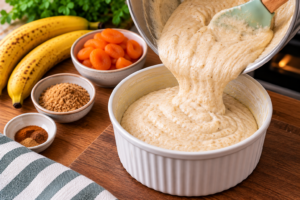
Pour into a 1½ litre / 3 pint lightly greased soufflé dish and cook in a preheated oven at 200°C / 400°F / Gas 6 for 30–35 minutes, or until risen and golden.
Avoid repeatedly opening the oven door while it is baking.
6. Serve Immediately
Serve immediately, sprinkled with icing sugar if wished.
A freshly baked Banana Soufflé will naturally begin to lose some height as it cools, so bring it to the table soon after removing it from the oven.
Why Banana and Apricot Work Well Together
Banana provides more than sweetness in this recipe. When puréed, ripe banana also contributes body and a creamy texture to the fruit mixture.
Apricots provide contrast. Their fruitiness prevents the banana flavor from dominating the entire dessert, while lemon juice adds another acidic element.
Cinnamon and allspice are used in small quantities. Rather than turning this into a heavily spiced dessert, they provide gentle warmth behind the fruit.
The recipe also contains 25 g of light brown muscovado sugar. Ripe bananas provide natural sweetness and flavor, while this relatively small amount of added sugar complements the fruit and spices.
The Most Important Step: Folding the Egg Whites
If there is one technique worth paying attention to when making this Banana Soufflé, it is folding the egg whites.
Whisking egg whites incorporates air. During baking, that aerated structure helps the soufflé expand.
Once the whites have been whisked until stiff, avoid beating them aggressively into the heavier banana mixture.
Instead, add them gently and use a folding motion to combine the mixtures. Scrape down through the center and around the bowl, turning the mixture over rather than rapidly stirring it.
Stop once the egg whites have been incorporated. Continuing to mix unnecessarily can remove some of the air you’ve just created.
A Practical Soufflé Checklist
Before you start the final mixing stage, make sure:
The oven is fully preheated to 200°C / 400°F / Gas 6.
Your 1½ litre / 3 pint soufflé dish is lightly greased.
The fruit purée is prepared.
The cooked milk-and-flour base is ready.
The eggs have been separated.
Your whisk and egg-white bowl are clean.
Any optional icing sugar is ready for serving.
Having everything prepared means the aerated mixture can go into the oven without sitting around unnecessarily.
How to Tell When Banana Soufflé Is Ready
After approximately 30–35 minutes, look for a soufflé that has risen and developed a golden surface.
Avoid opening the oven every few minutes to check its progress. Opening the door causes the oven temperature to fall.
Because ovens vary, appearance matters as well as the clock. The finished dessert should look risen and golden rather than pale and wet.
Once it’s ready, remove it carefully and serve promptly.
Because this soufflé contains eggs, cook it thoroughly. The USDA recommends cooking egg dishes to an internal temperature of 160°F (71.1°C), measured with a food thermometer. See the USDA’s egg safety guidance for more information.
Why Did My Soufflé Sink?
Some deflation after baking is completely normal.
The hot air and steam inside the soufflé contribute to its expansion in the oven. As the dessert cools after being removed, that structure naturally contracts.
A dramatic collapse can also be made worse by preparation problems. Common causes include insufficiently whisked egg whites, aggressively mixing the whites into the base, or removing the soufflé before it has baked sufficiently.
This is why timing your serving matters. Don’t bake the dessert and then leave it waiting while everyone finishes dinner.
Common Mistakes to Avoid
Using underripe bananas: Ripe bananas are softer, easier to purée, and provide better natural sweetness.
Adding milk too quickly: Gradually incorporating the milk makes it easier to maintain a smooth base.
Using a greasy bowl for the egg whites: Start with clean equipment when whisking the whites.
Under-whisking the egg whites: They should reach the stiff stage specified in the recipe.
Overmixing after adding the whites: Gentle folding helps preserve the aerated structure.
Using the wrong dish size: The recipe is designed for a 1½ litre / 3 pint soufflé dish.
Opening the oven repeatedly: Try to maintain a stable oven temperature during baking.
Preparing it too early: Soufflé is a serve-immediately dessert.
Can You Prepare It Ahead?
The finished Banana Soufflé isn’t particularly suitable for baking hours ahead because its defining light, risen texture is temporary.
A better approach is to organize the preparation.
Measure the ingredients, prepare the soufflé dish, check your oven temperature, and have the necessary bowls and utensils ready before you reach the egg-white stage.
If you’re serving the dessert after dinner, work backward from when you want to eat it. Because baking takes around 30–35 minutes, put it into the oven at a time that allows you to serve it shortly after baking.
That’s more reliable than baking early and attempting to preserve its height.
Serving Suggestions
The original recipe keeps serving very simple: add a light dusting of icing sugar if desired.
That’s a good approach because the dessert already contains banana, apricot, cinnamon, and allspice.
Serve it warm and divide it between four portions soon after it leaves the oven.
If presentation matters, have the serving plates and spoons ready before removing the soufflé from the oven. That way, you aren’t searching for dishes while the dessert is beginning to settle.
Storage
A soufflé is at its best immediately after baking.
If leftovers remain, allow them to cool and refrigerate them promptly in a covered container. However, don’t expect a refrigerated or reheated portion to reproduce the tall, airy structure of a freshly baked soufflé.
For that reason, this recipe is better prepared when four portions can reasonably be served rather than intentionally made several days ahead.
If you enjoy light oven-baked dishes, try our Mixed Vegetable Flan for another simple homemade recipe.
Frequently Asked Questions
Can I make Banana Soufflé without icing sugar?
Yes. Icing sugar is optional and is only sprinkled over the finished dessert if desired.
Why does this recipe use three egg whites but only two yolks?
The ingredients intentionally specify 2 egg yolks and 3 egg whites. The additional whipped white contributes to the aerated mixture.
Can I replace the wholemeal flour?
The original recipe specifically calls for 25 g plain wholemeal flour. If you want to reproduce the recipe as written, use that rather than substituting another flour.
Do the apricots need soaking?
No. The recipe specifically calls for no-need-to-soak apricots.
What size dish do I need?
Use a lightly greased 1½ litre / 3 pint soufflé dish.
Why should Banana Soufflé be served immediately?
A soufflé naturally begins to deflate as it cools. Serving promptly gives you the best opportunity to enjoy its freshly risen texture.
Nutrition Information
Approximate nutrition per serving (1/4 of recipe):
Calories: ~230 kcal
Protein: ~7 g
Carbohydrates: ~36 g
Fat: ~8 g
Fiber: ~3 g
Sugar: ~23 g
Sodium: ~100 mg
These figures are estimates. Actual nutrition will vary according to the size and ripeness of the bananas, specific margarine and milk used, ingredient brands, and serving size.
Final Tips
The success of this Banana Soufflé depends less on complicated ingredients and more on good timing and careful technique. Preheat the oven before completing the mixture, prepare the correct-sized dish, whisk the egg whites properly, and fold rather than aggressively stir.
Most importantly, plan to serve the soufflé as soon as it comes out of the oven. The combination of ripe banana, apricot, cinnamon, and allspice is at its best when the dessert is warm, freshly risen, and golden.