
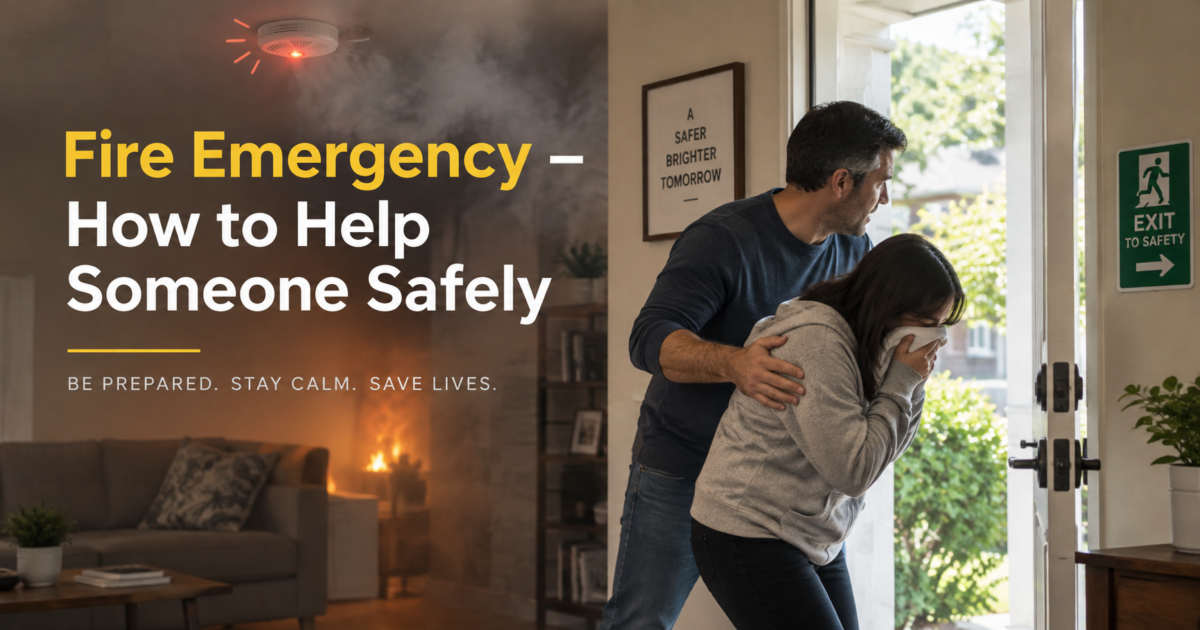
Fire Emergency – How to Help Someone Safely
A fire emergency can become dangerous within seconds. Flames, heat, and smoke may spread quickly, leaving very little time to decide what to do. When someone appears to be in danger, your first instinct may be to rush toward them, but helping safely is more important than acting without thinking.
Basic fire emergency safety begins with protecting yourself. If you become trapped, injured, or overcome by smoke while trying to help, emergency responders may have another person to rescue. Your priorities should be to warn people, escape safely, call emergency services, help others only when you can do so without serious danger, and provide basic first aid once you are away from the fire.
This guide explains practical steps ordinary people can follow during a fire emergency, including safe evacuation, helping someone whose clothes catch fire, responding to smoke inhalation, treating burns, and avoiding dangerous mistakes.
Fire Emergency Safety Starts With Protecting Yourself
Before attempting to help anyone, look at the danger around you.
Do not enter a burning building, heavily smoke-filled room, or area where flames are spreading quickly. Fire conditions can change suddenly, and smoke can make it difficult to see, breathe, or find your way back outside.
If you are already inside when the fire starts, focus on getting yourself and anyone immediately with you out safely.
Remember this simple rule: Get out, stay out, and call for help.
Once you have escaped, do not go back inside for a person, pet, phone, medication, documents, or other belongings. Instead, tell firefighters who may still be inside and where that person was last seen.
What to Do When You Discover a Fire
If you see flames, heavy smoke, or another clear sign of fire, act quickly.
Warn Everyone Nearby
Shout clearly that there is a fire.

Activate the building fire alarm if one is available and you can reach it safely without moving toward the fire.
Do not assume everyone has already heard the alarm. Children, older adults, people who are asleep, and people wearing headphones may need additional warning.
Start Evacuating
Use the nearest safe exit.
In a multi-story building, use the stairs rather than an elevator unless emergency officials specifically instruct otherwise.

Leave personal belongings behind.
If a child, older adult, or person with limited mobility is already near you, help guide them toward a safe exit when you can do so without putting yourself in serious danger.
Close Doors Behind You
When practical, close doors as you leave.
Closing a door may help slow the spread of smoke, heat, and flames into other areas.
Do not stop to lock doors. Simply close them and continue toward safety.

Call Emergency Services
Once you are outside or safely away from the immediate danger, call 911 in the United States or the appropriate emergency number in your location.
Tell the dispatcher:
The exact address
What appears to be burning
Whether anyone may still be inside
Where missing people were last seen
Whether anyone has burns or breathing problems
Stay on the line and follow the dispatcher’s instructions.

How to Help Someone Escape Safely
Good fire emergency safety does not mean putting yourself into dangerous smoke or flames.
Help someone when they are already beside you or can be reached along your safe escape path.
Encourage them to move immediately.
Do not spend time collecting phones, bags, money, laptops, or other belongings.
If smoke is present while you are escaping, stay low as you move toward the safest available exit.
If your normal escape route is blocked by heavy smoke, heat, or flames, use another safe route if one is available.
Be Careful Before Opening Doors
Do not immediately open a closed door if you believe fire may be on the other side.
If the door or handle feels unusually hot, do not open it.
Use another escape route.
Opening a door into an active fire may allow intense smoke and heat to enter your area.
What If Someone Is Trapped
If someone is trapped but you cannot reach them safely, do not enter the dangerous area.
Tell firefighters:
Who is missing
Their approximate age
Which room or floor they may be on
Where they were last seen
Whether they have difficulty walking or escaping independently
This information can help professional rescuers focus their search.
If you are trapped inside, move as far away from the fire as possible. If you can, enter a room that can be closed off from the fire and close the door.
Call emergency services and explain exactly where you are.
If there is a window, use it to signal rescuers if possible.
Do not jump from an upper-floor window unless emergency professionals specifically direct you to do so.
What If Someone’s Clothes Catch Fire
If clothing catches fire, running can make the situation worse.

Remember:
Stop. Drop. Roll.
The person should:
Stop moving.
Drop to the ground.
Cover their face with their hands if possible.
Roll repeatedly until the flames are extinguished.
Once the flames are completely out, move away from the fire and check the person for burns.
Serious burns require urgent medical attention.
Helping Someone Who Has Inhaled Smoke
Smoke inhalation can be serious even if there are no visible burns.

Move the person into fresh air only if you can do so without entering a dangerous area.
Watch for symptoms such as:
Difficulty breathing
Shortness of breath
Persistent coughing
Chest discomfort
Confusion
Unusual sleepiness
Fainting
Burns around the face, mouth, or nose
Severe headache after significant smoke exposure
A person who initially appears well may still develop problems after being exposed to heavy smoke, especially inside an enclosed space.
Keep them resting in fresh air and do not allow them to return to the building.
Fire Emergency Safety for Burns
Burn first aid should begin only after the person is safely away from flames, smoke, electricity, or another immediate danger.
For a thermal burn, cool the affected area under clean, cool running water for 5–20 minutes, if possible. Remove nearby jewelry or tight items before swelling develops, but do not remove anything stuck to the skin. When cooling a large burn, especially in a child, help prevent the person from becoming too cold. Seek urgent medical care for serious burns.
Do not use ice directly on a burn.
If possible, remove rings, watches, belts, or other tight objects near the burn before swelling develops.
However, do not pull away clothing or material that is stuck to burned skin.
After cooling, protect the injured area loosely with a clean, non-stick dressing when appropriate.
For more information about burn first aid, review this burn care guidance.
Avoid Home Remedies
Do not put these on a fresh burn:
Butter
Cooking oil
Toothpaste
Grease
Ice
Household creams
Adhesive material directly over badly damaged skin
Do not deliberately break burn blisters.
When a Burn Needs Urgent Medical Attention
Seek urgent medical help when:
The burn appears deep
The skin looks white, brown, black, charred, or leathery
A large area of the body is burned
The face, neck, hands, feet, genitals, or a major joint is affected
The burn goes around a limb, chest, or neck
Electricity or chemicals caused the injury
The person has inhaled smoke
Breathing becomes difficult
The person becomes confused, weak, unusually sleepy, or unconscious
You are unsure how serious the injury is
Children, older adults, and people with significant health conditions may need medical assessment even when a burn initially appears limited.
What If the Person Is Unconscious
Once the person is in a safe location, check whether they respond and whether they are breathing normally.
Call emergency services immediately.
If they are not breathing normally, begin CPR if you know how and follow instructions from the emergency dispatcher.
If an automated external defibrillator is available, use it according to its instructions.
Never attempt CPR while you are still in an area threatened by active fire, heavy smoke, electricity, or structural collapse.
Your own safety must come first.
For more emergency response guidance, read our Road Accident First Aid guide.
Should You Use a Fire Extinguisher
A fire extinguisher may help with a very small and contained fire, but trying to fight a growing fire can waste valuable escape time.
Consider using an extinguisher only when:
The fire is small and contained
You know how to operate the extinguisher
Other people are already leaving or safe
The area is not filling with smoke
You have a clear escape route behind you
If the fire grows, produces heavy smoke, or does not go out quickly, leave immediately.
Property can be replaced. Lives cannot.
Common Fire Emergency Safety Mistakes
Going Back Inside
Once you escape, stay outside.
Tell firefighters if another person or pet may still be inside.
Looking for Valuables
Do not delay your escape to collect phones, wallets, documents, jewelry, or other belongings.
Opening a Hot Door
A hot door may indicate dangerous fire conditions on the other side.
Use another route.
Ignoring Smoke Exposure
Someone can have a serious inhalation injury without visible burns.
Breathing difficulty, confusion, fainting, persistent coughing, or significant smoke exposure should never be ignored.
Putting Ice or Home Remedies on Burns
Butter, oil, toothpaste, grease, and ice are not appropriate treatments for serious burns.
Fire Emergency Safety Checklist
When panic makes it difficult to think clearly, remember this simple order.
1. Alert
Warn everyone about the fire.
2. Escape
Use the nearest safe exit.
3. Close
Close doors behind you when practical.
4. Stay Out
Do not re-enter after escaping.
5. Call
Contact emergency services from a safe location.
6. Report
Tell firefighters if anyone may still be inside.
7. Give First Aid
Once safely away from danger, help with burns, smoke exposure, breathing emergencies, or CPR according to your level of training.
This fire emergency safety checklist keeps escaping danger ahead of attempts to save property or fight the fire.
Prepare Before a Fire Happens
Preparation can make a real emergency easier to handle.
Every household should have a simple fire escape plan.
Identify at least two possible ways out of rooms when practical and choose an outdoor meeting point where everyone will gather after escaping.
Practice the plan with family members, including children.
Think about anyone who may need extra help, such as:
Young children
Older adults
People with limited mobility
People who are deaf or hard of hearing
Overnight guests
Everyone should know that after reaching the meeting point, they must stay outside rather than returning to look for another person.
Install working smoke alarms on every level of your home, inside bedrooms, and outside sleeping areas. Test them monthly and replace batteries or alarms as recommended by the manufacturer. Make sure everyone knows at least two ways to escape from each room when possible, and practice your family fire escape plan at least twice a year.
Frequently Asked Questions
Should I rescue someone from a burning building
Do not enter an actively burning or heavily smoke-filled building without proper training and protective equipment. Tell firefighters where you believe the trapped person is located.
Can I use ice on a burn
No. Cool running water is generally more appropriate for cooling a thermal burn.
What should I do if my normal exit is blocked
Use another safe escape route if available. If you cannot escape, move away from the fire, close a door between yourself and the fire, call emergency services, and signal rescuers if possible.
Can smoke inhalation be dangerous without visible burns
Yes. Smoke can affect the airway and lungs even when the person’s skin appears normal.
Final Thoughts
Good fire emergency safety is about making safe decisions during a frightening situation.
Raise the alarm, use the safest available exit, help nearby people when you can do so safely, stay outside after escaping, and call emergency services.
Once everyone is away from immediate danger, basic first aid can help with burns, smoke exposure, unconsciousness, and breathing emergencies until professional responders arrive.
The most important lesson is simple: helping someone during a fire does not mean putting yourself into the flames. Safe evacuation, accurate information for firefighters, and appropriate first aid from a safe location can often be the most useful help you can provide.
3 thoughts on “Fire Emergency – How to Help Someone Safely”