

Basic Bleeding First Aid: Simple Steps to Help Someone
Severe bleeding is one of the most serious emergencies a person can experience. A deep cut, major accident, workplace injury, or other trauma can cause rapid blood loss that may become life-threatening within minutes.
During a bleeding emergency, the most important thing is to act quickly while keeping yourself safe. Knowing the correct first aid steps can help slow blood loss and give the person a better chance of receiving professional medical care.
The goal of bleeding first aid is not to completely treat the injury. Your role is to control the bleeding, protect the injured person, call emergency services, and provide support until trained medical help arrives.
Bleeding First Aid Starts With Safety
Before helping someone who is bleeding heavily, check the area around you.

Make sure there is no immediate danger such as traffic, fire, broken glass, electrical hazards, or violence. If the environment is unsafe, move away from danger first or wait for emergency responders if necessary.
Your safety matters because becoming injured yourself can prevent you from helping the person.
If available, wear disposable gloves or use a clean barrier between your hands and the blood. This helps reduce contact with bodily fluids.
How to Recognize Severe Bleeding
Not every cut requires emergency action, but severe bleeding has warning signs.
Signs of serious bleeding may include:
Blood flowing continuously and heavily
Blood that does not slow after applying pressure
Blood soaking through clothing or dressings quickly
A deep wound with significant tissue damage
Blood coming out in a strong flow
A large amount of blood around the injured person
Signs of shock such as pale skin, weakness, dizziness, confusion, or fainting
A person can lose a dangerous amount of blood even from an injury that looks small, especially if bleeding cannot be controlled.
Call Emergency Services Quickly
If someone has severe bleeding, call emergency services as soon as possible.

In the United States, call 911. Use the appropriate emergency number in your location.
If another person is nearby, ask them to make the call while you begin first aid.
Tell the dispatcher:
The location of the emergency
What caused the injury if known
How severe the bleeding appears
The person’s condition
Whether they are conscious and breathing normally
Follow the dispatcher’s instructions while continuing to help.
Apply Firm Direct Pressure
The most important step in bleeding first aid is applying firm pressure directly on the wound.
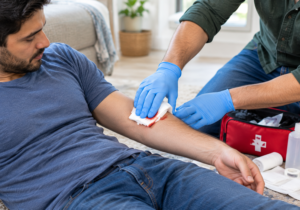
Use a clean cloth, sterile dressing, towel, or any available clean material.
Place it directly over the bleeding area and press firmly.
Do not repeatedly remove the cloth to check whether the bleeding has stopped. Removing the covering can disturb clots that are forming and may restart bleeding.
If blood soaks through the material, add another layer on top and continue applying pressure.
Keep pressure steady until professional help arrives or the bleeding is controlled.
Keep the Person Still and Calm
A person with heavy bleeding may become frightened, weak, or confused.

Help them stay as calm and still as possible.
Have them lie down if they feel dizzy or weak.
Avoid unnecessary movement because moving can increase blood flow and may make some injuries worse.
Speak calmly and reassure them that help is coming.
Monitor their condition while waiting for emergency responders.
What to Do If an Object Is Stuck in the Wound
Sometimes an object such as glass, metal, or another item may remain inside a wound.
Do not remove an object that is deeply stuck.
Removing it can increase bleeding or cause additional damage.
Instead:
Apply pressure around the object, not directly on it
Place clean material around the object to support it
Keep the person still
Wait for medical professionals
Only trained medical providers should remove deeply embedded objects.
Using a Tourniquet for Life-Threatening Bleeding
A tourniquet may be used for severe bleeding from an arm or leg when direct pressure is not enough or when bleeding is immediately life-threatening.

Tourniquets should be used according to proper training and instructions.
If you have access to a commercial tourniquet and know how to use it, follow the manufacturer’s instructions.
Do not use makeshift items such as belts, ropes, or thin materials as improvised tourniquets because they may not work correctly and can cause harm.
If a tourniquet is applied, do not remove it yourself. Medical professionals should manage further treatment.
When Wound Packing May Be Needed
Wound packing may help control life-threatening bleeding from certain deep wounds where a tourniquet cannot be used, such as wounds in the groin or shoulder area.
Wound packing should only be performed by someone who has received appropriate training or is following emergency dispatcher instructions.
- Call emergency services immediately.
- Use suitable gauze, preferably hemostatic gauze if available, according to your training.
- Apply firm, continuous pressure after packing the wound.
- Continue following the emergency dispatcher’s instructions until professional help arrives.
Do not pack wounds in the chest or abdomen. If you are unsure what to do, apply direct pressure where appropriate and follow the emergency dispatcher’s guidance.
Learn more from the American Red Cross guide to life-threatening bleeding.
Signs of Shock After Blood Loss
Severe bleeding can lead to shock, which is a dangerous condition where the body is not getting enough blood circulation.
Possible signs include:
Pale or clammy skin
Weakness
Dizziness
Fast breathing
Confusion
Extreme thirst
Fainting
Feeling very cold
While waiting for help:
Keep the person lying down if possible
Keep them warm with a blanket or clothing
Do not give them food or drinks
Continue monitoring their breathing and awareness
If the person becomes unconscious or stops breathing normally, follow emergency dispatcher instructions.
Common Mistakes During Severe Bleeding
Removing the First Dressing Too Soon
A common mistake is lifting the dressing repeatedly to check the wound.
This can interrupt clot formation and restart bleeding.
Applying Pressure Too Lightly
Gentle pressure may not be enough for severe bleeding.
Firm, continuous pressure is usually needed.
Removing Embedded Objects
Pulling out a deeply stuck object can make bleeding worse.
Leave it in place until medical help arrives.
Using Unsafe Materials
Avoid putting dirty materials, powders, oils, or household substances into an open wound.
These can increase the risk of infection.
Forgetting Personal Safety
Helping someone does not mean ignoring your own safety.
Always check for hazards first.
Bleeding First Aid for Different Situations
Cuts and Deep Wounds
Apply direct pressure with a clean covering and seek medical help if bleeding is heavy or difficult to control.
Road Accidents
Do not move an injured person unnecessarily unless there is immediate danger.
Control bleeding while waiting for emergency responders.
Workplace Injuries
Follow workplace emergency procedures and call for professional assistance immediately.
Animal Bites or Severe Scratches
Control bleeding first, then seek medical evaluation because bites may require additional treatment.
When Medical Help Is Always Needed
Seek emergency medical care for:
Bleeding that does not stop after applying pressure
Deep wounds
Heavy blood loss
Injuries involving major blood vessels
Severe accidents
Signs of shock
Loss of consciousness
Injuries caused by machinery, weapons, or serious trauma
Even if bleeding appears controlled, some injuries may require professional assessment.
How to Prepare for a Bleeding Emergency
Being prepared before an emergency happens can make a big difference.
A home first aid kit should include:
Sterile gauze
Clean bandages
Medical tape
Disposable gloves
Antiseptic supplies
Emergency instructions
Scissors
Keep a first aid kit in places where emergencies are likely, such as your home or vehicle.
For more guidance on preparing emergency supplies, read our guide to creating a [home first aid kit].
Learning basic first aid skills can help you respond more confidently when someone needs immediate assistance.
Frequently Asked Questions
Should I wash a wound before stopping severe bleeding?
No. If bleeding is severe, controlling the bleeding comes first. Cleaning can be done later when the situation is under control.
Should I remove a blood-soaked bandage?
No. Add another clean layer on top and continue applying pressure.
Can I use a tourniquet if I have never used one before?
Only use a tourniquet if you have proper instructions or training and the situation involves life-threatening bleeding.
How long should I apply pressure?
Continue firm pressure until bleeding stops or emergency professionals take over.
Knowing how to respond during different emergencies is important. You can also read our guide on Fire Emergency – How to Help Someone Safely to learn how to stay safe and help others during a fire situation.
Final Thoughts
Severe bleeding can be frightening, but quick and correct action can make a critical difference.
The most important steps are staying safe, calling emergency services, applying firm direct pressure, keeping the person calm, and monitoring their condition until help arrives.
You do not need to be a medical professional to provide valuable assistance. Learning basic bleeding first aid can help you respond calmly and safely during a serious emergency.