
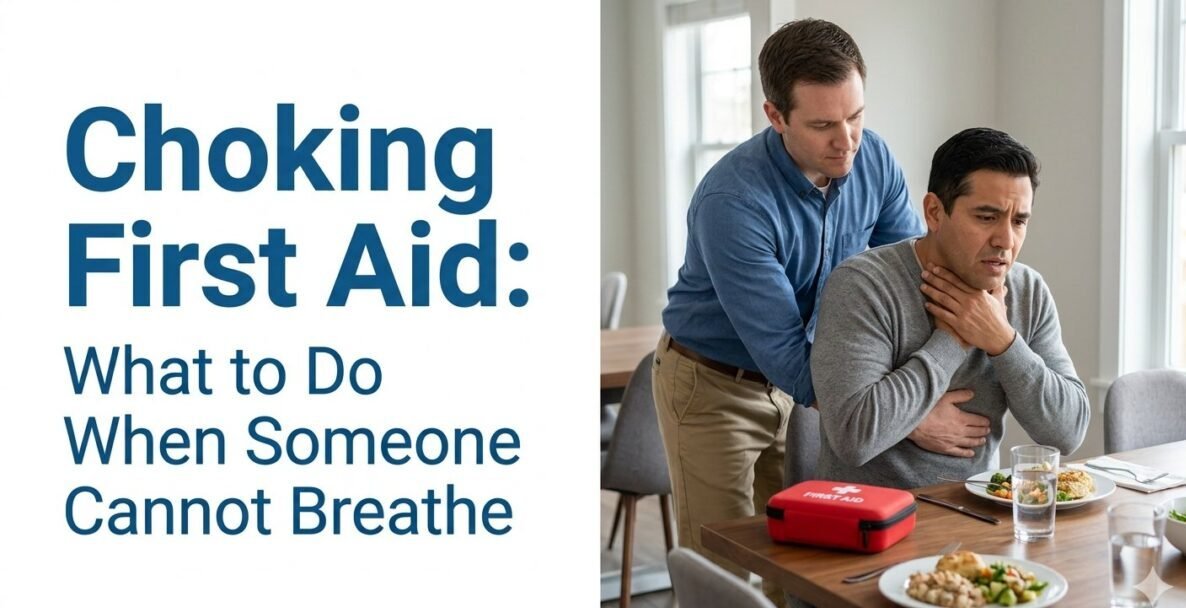
Simple Choking Safety Tips Everyone Should Know
Choking is a sudden emergency that can happen when food, a small object, or another item blocks a person’s airway and prevents normal breathing. Because a blocked airway can become serious quickly, knowing basic choking first aid can help you respond calmly while waiting for professional help.
A choking emergency can happen at home, in restaurants, at workplaces, or anywhere people eat and interact with small objects. Adults may choke on food, while children and infants are at higher risk because they often explore objects by putting them in their mouths.
The goal of choking first aid is not to replace medical treatment. Your role is to recognize the emergency, provide appropriate help, call emergency services when needed, and support the person until normal breathing returns or professional help arrives.
What Is Choking?
Choking happens when something blocks the airway, making it difficult or impossible for air to reach the lungs.
The airway is the passage that carries air from the mouth and nose to the lungs. When an object blocks this pathway, the body may not receive enough oxygen.
Some common causes of choking include:
Large pieces of food
Eating too quickly
Not chewing food properly
Small toys or objects in children
Coins or household items
Hard foods that are difficult to swallow
A person who is choking may not be able to speak, cough effectively, or breathe normally.
Signs Someone May Be Choking
Recognizing choking quickly is one of the most important parts of first aid.
Common signs include:
Holding their hands around their throat
Difficulty speaking or making sounds
Weak or silent coughing
Trouble breathing
A worried or panicked expression
Skin turning pale or bluish
Loss of consciousness in severe cases
A person who can cough strongly may still be able to clear the blockage themselves. However, someone who cannot cough, speak, or breathe needs immediate help.

First Steps Before Helping Someone Who Is Choking
Before providing assistance, quickly assess the situation.
Stay Calm and Act Quickly
A choking emergency can be frightening, but staying calm helps you make better decisions.
Speak to the person and ask:
“Are you choking?”
If they can respond, encourage them to keep coughing if they are able to do so.
Check If They Can Breathe or Speak
A person who can talk or cough forcefully may have a partial blockage.
A person who cannot:
Speak
Breathe
Make sounds
Cough effectively
may have a complete airway blockage and needs immediate assistance.
Call Emergency Services
If the blockage does not clear or the person cannot breathe, call emergency services.
If another person is nearby, ask them to make the call while you provide first aid.
Emergency responders can guide you through the situation and provide additional instructions.
You can also learn more about basic first aid responses through trusted resources like the American Red Cross.
Choking First Aid for Adults and Children Over One Year Old
For a conscious adult or child over one year old who cannot breathe or cough effectively, first aid involves helping remove the blockage.
Encourage Strong Coughing First
If the person can still cough forcefully, encourage them to continue coughing.
Coughing is the body’s natural way of trying to remove an object from the airway.
Do not immediately perform physical interventions if they are coughing effectively.
Give Back Blows
If coughing is not working, ask someone to call emergency services.
- Stand slightly behind the person.
- Support their chest with one hand and lean them forward.
- Give up to 5 firm back blows between the shoulder blades using the heel of your hand.
- Check after each blow to see whether the blockage has cleared.
If the blockage remains after 5 back blows, move to the “Perform Abdominal Thrusts” section below.

Perform Abdominal Thrusts
If 5 back blows do not clear the blockage, give up to 5 abdominal thrusts.
- Stand behind the person and wrap your arms around their waist.
- Make a fist and place it just above the belly button, below the ribs.
- Hold your fist with your other hand.
- Give up to 5 quick inward and upward thrusts.
- Check after each thrust to see whether the blockage has cleared.
If the blockage remains, repeat up to 5 back blows followed by up to 5 abdominal thrusts. Continue until the object comes out or the person becomes unresponsive. Do not use abdominal thrusts on babies under 1 year old. For a pregnant person, use chest thrusts instead. Follow emergency dispatcher instructions.
What To Do If a Choking Person Becomes Unconscious
If the person becomes unresponsive:
- Carefully lower them onto a firm, flat surface.
- Call emergency services, or ask someone nearby to call.

- Begin CPR, starting with chest compressions, and follow the emergency dispatcher’s instructions.
- When checking the mouth during CPR, remove an object only if you can clearly see it and remove it safely. Never perform a blind finger sweep.
Continue CPR and follow the dispatcher’s instructions until emergency help arrives or the person shows signs of recovery.
Choking First Aid for Babies Under One Year
Infants require different choking first aid because their bodies are smaller and abdominal thrusts should not be used.
Parents and caregivers can learn more about choking response from the St John Ambulance choking first aid guide.
Signs an infant may be choking include:
Unable to cry or make sounds
Difficulty breathing
Weak cough
Changes in skin color
Becoming unusually quiet
For a choking infant:
- Ask someone to call emergency services while you provide first aid, if possible.
- Support the baby’s head and neck. Position the baby face-down along your forearm, keeping the head lower than the chest.

- Give up to 5 back blows between the shoulder blades, checking after each blow.
- If the blockage remains, carefully turn the baby face-up while supporting the head and neck.
- Give up to 5 chest thrusts using the heel of one hand in the center of the chest, just below the nipple line.
- If the baby is still choking, repeat up to 5 back blows followed by up to 5 chest thrusts, and follow the emergency dispatcher’s instructions.
Never use abdominal thrusts on a baby. If the baby becomes unresponsive, call emergency services and begin infant CPR according to your training and the dispatcher’s instructions.
Never shake a choking baby or attempt to remove an object that cannot be easily seen.
Common Choking First Aid Mistakes
Hitting Someone on the Back While They Are Standing Upright
Back blows work best when the person is leaning forward so the object can move out.
Giving Water or Food
Do not give water or additional food to someone who is choking. It can make the situation worse.
Trying to Remove an Object Without Seeing It
Blind finger sweeps can push objects deeper into the airway.
Only remove an object if it is clearly visible and easy to remove.
Delaying Emergency Help
Some choking situations become serious quickly. Do not wait too long if the person cannot breathe or respond.
Using Incorrect Techniques on Babies
Infants need special choking first aid methods because their bodies are different from adults.
How to Prevent Choking at Home
Many choking emergencies can be reduced with simple safety habits.
For Adults
Eat slowly
Chew food completely
Avoid talking or laughing while chewing
Be careful with hard foods
For Children
Cut food into small, safe pieces
Supervise young children while eating
Keep small objects away from children
Choose age-appropriate toys
For Infants
Avoid giving babies foods that are difficult to chew or swallow.
Always supervise infants during feeding.
When Medical Help Is Needed After Choking
Even if the object is removed, medical advice may be needed if the person:
Had difficulty breathing
Lost consciousness
Has ongoing coughing
Experiences chest discomfort
Has trouble swallowing
A healthcare professional can check whether there are any remaining problems after a choking incident.
Frequently Asked Questions
What should I do if someone is choking but can still cough?
Encourage them to continue coughing. A strong cough may help remove the blockage naturally.
Should I hit someone’s back if they are choking?
Yes, back blows can be part of choking first aid when the person cannot clear the blockage themselves.
Can I use my fingers to remove food from someone’s throat?
Only remove an object if it is clearly visible and easy to reach. Blind finger sweeps can make choking worse.
Can babies receive the same choking first aid as adults?
No. Infants require different techniques because of their smaller size and physical development.
When should I call emergency services for choking?
Call emergency services if the person cannot breathe, cannot speak, becomes unconscious, or the blockage does not clear.
Knowing how to respond during different emergencies is an important life skill. You can also read our guide on Fire Emergency – How to Help Someone Safely to learn important steps for staying safe during a fire emergency.
Final Thoughts
A choking emergency can happen without warning, but knowing basic choking first aid can help you respond quickly and safely.
The most important steps are recognizing the signs, staying calm, encouraging effective coughing when possible, providing appropriate first aid, and calling emergency services when necessary.
Learning these basic skills can help you protect family members, friends, and others during a potentially serious emergency. First aid knowledge gives you the confidence to take action while professional help is on the way.
1 thought on “Simple Choking Safety Tips Everyone Should Know”