
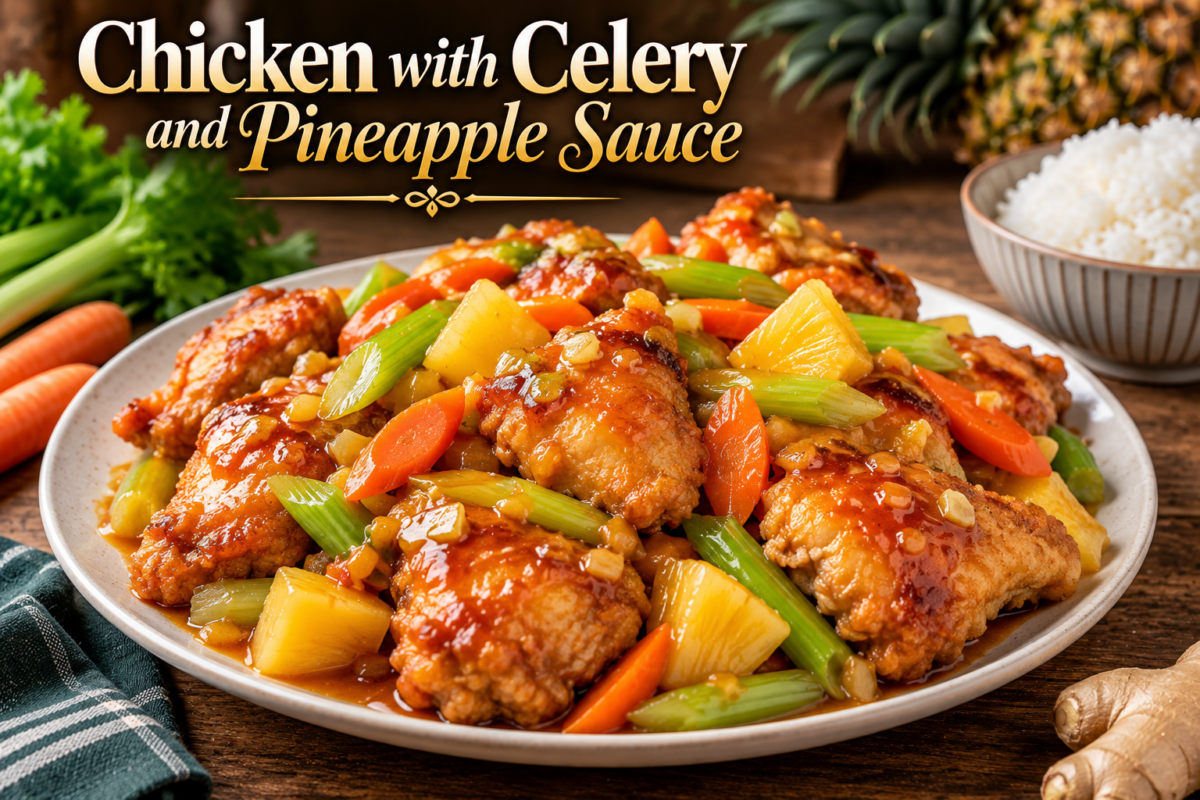
This Pineapple Chicken combines tender chicken with a crisp golden coating and a warm sweet-and-tangy sauce made with pineapple, celery, carrots, ginger, soy sauce, brown sugar, and vinegar. Unlike recipes where raw chicken is fried from the beginning, the chicken here is first gently simmered until cooked, cooled, portioned, coated, and then briefly deep-fried. That gives you cooked, tender meat inside while the final frying creates the golden exterior.
The sauce is equally important. Pineapple syrup and brown sugar provide sweetness, vinegar brings acidity, soy sauce adds savory depth, and fresh ginger keeps the flavor from becoming one-dimensional. Celery and carrots provide texture against the softer pineapple.
The method has several stages, but none is complicated. The key is doing them in the right order and keeping the sauce separate from the fried chicken until serving.
Prep Time: 25 minutes
Chicken Cooking Time: About 2 hours
Final Cooking Time: 15–20 minutes
Total Time: About 2 hours 45 minutes
Servings: 4–6
Ingredients
For the Chicken
- 1 whole chicken, approximately 2 kg (4 lb)
- 2 eggs, beaten
- 50 g / 2 oz flour or corn flour
- Oil, for deep-frying
For the Pineapple Chicken Sauce
- 15 ml / 1 tablespoon corn flour
- 15 ml / 1 tablespoon soy sauce
- 5 ml / 1 teaspoon finely chopped fresh ginger
- 1 × 225 g / 8 oz can pineapple rings, chopped
- 60 ml / 4 tablespoons pineapple syrup, reserved from the can
- 60 ml / 4 tablespoons brown sugar
- 60 ml / 4 tablespoons vinegar
- 3 celery stalks, diagonally sliced
- 2 carrots, diagonally sliced
Instructions
1. Gently Cook the Chicken
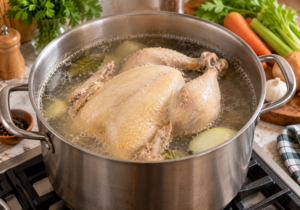
Place the whole chicken in a saucepan or stockpot large enough to hold it comfortably. Add enough water to cover the chicken.
Cover the pan and bring the water to a boil. Reduce the heat and simmer gently for approximately 2 hours, or until the chicken is completely cooked through.
Once cooked, carefully lift the chicken from the liquid and allow it to drain briefly. Use a food thermometer to confirm that the chicken has reached 165°F (73.9°C) internally. If you are not preparing the next step immediately, divide the chicken into smaller portions, place them in shallow containers, and refrigerate within 2 hours. Handle the chicken with clean utensils and coat it once it is cool enough to work with safely.
Don’t rush directly from simmering to coating. Allowing the chicken to cool makes it easier to divide into portions without the meat falling apart.
2. Prepare the Pineapple Chicken Sauce
While the chicken cools, make the sauce.
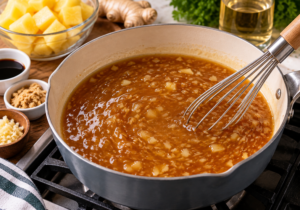
Put 1 tablespoon corn flour, soy sauce, chopped ginger, 4 tablespoons reserved pineapple syrup, and brown sugar into a saucepan. Stir well before heating so the corn flour disperses through the liquid rather than forming obvious lumps.
Bring the mixture to a boil while stirring.
Add the vinegar and continue cooking for approximately 2 minutes. The sauce should become smoother and slightly thickened.
3. Add the Celery, Carrots and Pineapple
Add the sliced celery, carrots, and chopped pineapple to the saucepan.
Stir until the vegetables and pineapple are evenly covered with sauce, then remove the pan from the heat and set it aside.
At this point, avoid repeatedly reheating the sauce. It will receive another 3–5 minutes of cooking immediately before serving, which gives you better control over the texture of the vegetables.

4. Portion and Coat the Chicken
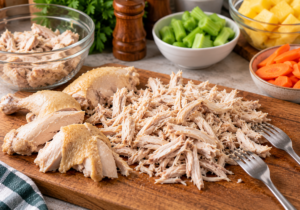
Once the chicken has cooled sufficiently, joint it into portions and halve each joint.
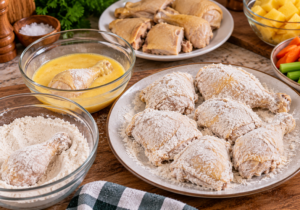
Prepare two shallow dishes: place the beaten eggs in one and the flour or corn flour in the other.
Dip each piece of cooked chicken into the beaten egg. Allow excess egg to drip away, then coat the piece with flour or corn flour.
Try to cover the surface evenly without creating an unnecessarily thick layer. A heavy coating can become oily and may separate from the chicken during frying.
5. Deep-Fry Until Golden
Heat the frying oil in a deep, suitable pan or fryer.
Carefully fry the coated chicken pieces until the coating is deep golden brown and the chicken is heated through. Use a food thermometer to confirm that the thickest pieces reach 165°F (73.9°C) internally. The time needed may vary with the size of the portions and the oil temperature.
The chicken is already cooked, so this stage is about creating the golden exterior and reheating the portions rather than cooking raw chicken from scratch.
Work in manageable batches rather than crowding the pan. Adding too many pieces simultaneously can cause the oil temperature to drop.
Remove the golden chicken and drain it thoroughly on kitchen towels. Transfer it to a warmed serving dish.
6. Reheat the Sauce
While the freshly fried chicken drains, return the saucepan containing the celery and pineapple sauce to the heat.
Reheat for 3–5 minutes, stirring occasionally, until the sauce is very hot.
This final heating stage also gives the carrots and celery additional cooking time without requiring them to simmer throughout the entire preparation.

7. Bring Everything Together
Immediately before serving, pour the hot sauce over the fried chicken.
Serve the Pineapple Chicken while everything is hot. If you particularly value a crisp coating, you can also spoon some sauce over individual portions at the table instead of leaving all the fried chicken sitting under the sauce for an extended period.

Why Cook the Chicken Before Frying?
This recipe uses a different method from many modern fried chicken recipes: a whole chicken is simmered first and fried only after it has been completely cooked.
That changes the purpose of frying. Instead of relying on hot oil to cook thick pieces of raw chicken all the way to the center, the short frying stage concentrates on browning the exterior.
There is also a practical benefit. A whole 2 kg chicken contains pieces of very different sizes. Pre-cooking it means the larger and smaller joints aren’t depending entirely on the same frying time to cook safely.
The trade-off is that cooked chicken is more delicate than raw chicken. Let it cool before jointing and coating so the portions are easier to handle.
How to Keep the Coating From Becoming Soggy
The biggest texture problem with this dish isn’t the chicken itself—it’s timing.
Once a wet sauce is poured over fried food, the coating naturally begins to soften. If the dish will be eaten immediately, pouring the sauce over the chicken works well. If dinner might sit on the table for a while, keep the sauce and chicken separate until everyone is ready.
Also drain each batch well after frying. Excess surface oil prevents the finished dish from feeling unnecessarily heavy.
For leftovers, storing the chicken and sauce separately, when practical, will preserve their individual textures better than storing everything already combined.
Getting the Sweet-and-Sour Balance Right
The sauce contains several strong ingredients: brown sugar, pineapple syrup, vinegar, soy sauce, and ginger. Each has a different job.
The pineapple syrup and brown sugar provide sweetness, while vinegar provides the contrasting acidity. Soy sauce contributes saltiness and savory flavor, and fresh ginger adds a sharper aromatic note.
Before changing the quantities substantially, taste the completed hot sauce. Sweetness and acidity are designed to balance one another, so changing only one ingredient can noticeably alter the finished result.
If you’re using a different brand of canned pineapple or soy sauce, the flavor may also vary slightly because products differ in sweetness and sodium.
Celery and Carrot Texture Matters
It can be tempting to cook the vegetables until completely soft, but some texture works particularly well here.
Slice the carrots and celery reasonably evenly so one piece isn’t thick and crunchy while another is already soft. Diagonal slices increase their surface area and work nicely in the sauce.
Remember that the vegetables are heated twice: first when they’re stirred into the sauce and again during the final 3–5 minute reheating. Avoid overcooking them during the first stage.
Flour or Corn flour: Which Should You Use?
The recipe allows either flour or corn flour for the chicken coating.
Regular flour provides a familiar fried coating, while corn flour can produce a lighter, crisper exterior. Either works, so there’s no need to purchase a separate ingredient if you already have one available.
Whichever you choose, coat the chicken only after dipping it in beaten egg and shake away obvious excess before frying.
What to Serve With Pineapple Chicken
Plain steamed rice is one of the most practical accompaniments because it absorbs some of the flavorful sauce while keeping the overall meal balanced in flavor.
Simple noodles are another option. You can also serve the dish with additional lightly cooked vegetables if you’re feeding more people.
Because Pineapple Chicken already contains a pronounced sweet, sour, and savory sauce, uncomplicated side dishes generally work better than another heavily seasoned accompaniment.
If you enjoy simple homemade chicken meals, try our Chicken & Vegetable Soup for another comforting lunch or dinner option.
Make-Ahead Strategy
If you’re preparing this for guests, don’t try to complete every stage at the last minute.
The chicken can be simmered earlier and allowed to cool. The vegetables can be sliced and the sauce ingredients measured in advance. This leaves coating, frying, final sauce reheating, and serving as the important last-minute jobs.
For the best texture, avoid frying the chicken hours ahead and then covering it with sauce. Freshly fried chicken and freshly reheated sauce are the two components worth finishing close to serving time.
Common Problems and How to Fix Them
The sauce has lumps: Mix the corn flour thoroughly with the other sauce ingredients before bringing it to the boil, and stir continuously as it heats.
The chicken coating feels greasy: The frying oil may have been too cool, or too many chicken pieces may have been added at once.
The coating falls off: Let excess beaten egg drip from the chicken before applying the flour or corn flour, and handle coated pieces gently.
The vegetables are too soft: Remember that celery and carrots cook again when the sauce is reheated. Keep the initial cooking brief.
The chicken loses its crispness: Don’t pour the sauce over it until close to serving.
The sauce is too thick: A very small amount of water or reserved pineapple syrup can loosen it. Add gradually rather than pouring in a large quantity at once.
Storage and Reheating
Refrigerate leftovers promptly in covered containers. Where possible, store the fried chicken separately from the remaining sauce.
When reheating Pineapple Chicken, make sure the chicken is heated thoroughly. The sauce can be reheated separately in a saucepan, stirring occasionally.
The chicken’s fried coating won’t be exactly as crisp after refrigeration, particularly if it has already been covered in sauce, so this recipe is at its best when freshly prepared.
For more information about safely storing and reheating leftovers, see the USDA Leftovers and Food Safety guidance.
Frequently Asked Questions
Can I use canned pineapple chunks instead of rings?
Yes. The important part is having approximately the same amount of pineapple and enough reserved syrup for the sauce.
Can I use corn flour for both the sauce and chicken coating?
Yes. Corn flour is required for thickening the sauce, and the recipe also allows it as an alternative to flour for coating the chicken.
Why shouldn’t I pour the sauce over the chicken early?
The moisture in the sauce gradually softens the fried coating. Combining them close to serving preserves more texture.
Can I prepare the chicken ahead of time?
You can simmer and cool the chicken ahead, but the coating and frying are best completed closer to serving.
Nutrition Information
Approximate nutrition per serving, based on 6 servings:
Calories: ~520 kcal
Protein: ~42 g
Carbohydrates: ~32 g
Fat: ~25 g
Fiber: ~2 g
Sugar: ~20 g
Sodium: ~500 mg
These values are estimates. Actual nutrition can vary considerably depending on the edible yield of the chicken, how much frying oil is absorbed, the soy sauce and pineapple used, and individual serving size.
Final Tips
For successful Pineapple Chicken, focus on three things: let the simmered chicken cool enough to handle properly, don’t overcrowd the frying oil, and wait until serving time to combine the crispy chicken with the hot sauce.
The result gives you several contrasting textures in one dish—tender chicken, a golden coating, juicy pineapple, and vegetables that still have some bite—while the ginger, soy sauce, sugar, pineapple, and vinegar create the distinctive sweet-and-tangy sauce.
1 thought on “Chicken with Celery and Pineapple Sauce”