
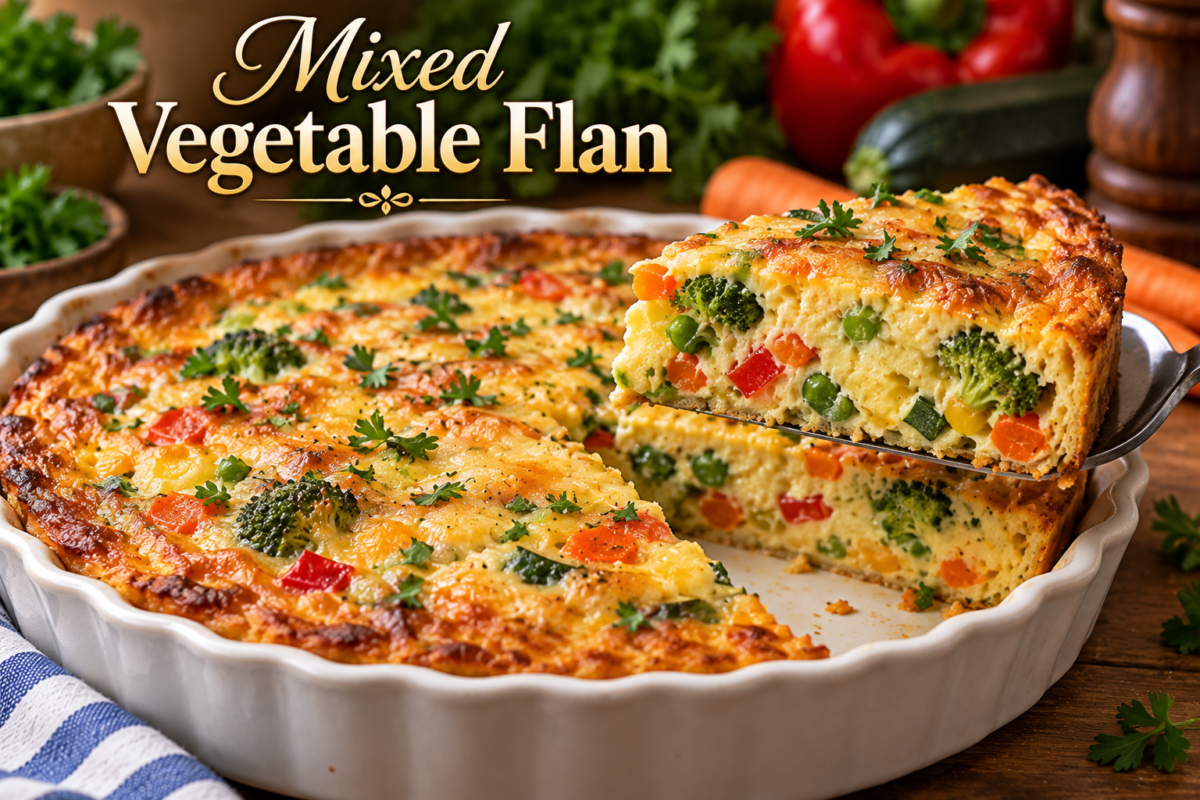
Mixed Vegetable Flan
A Vegetable Flan is a simple way to turn everyday vegetables into a warm, satisfying meal. This version combines colorful vegetables with a soft savory filling and a golden top, creating a dish that works well for lunch, a light dinner, or as part of a larger family meal.
One of the best things about this recipe is its flexibility. You can prepare the vegetables ahead of time, use a combination of fresh and frozen vegetables, and adjust the vegetables according to what you already have. The important part is controlling excess moisture so the finished flan sets properly instead of becoming watery.
Prep Time: 20 minutes
Cook Time: 35 minutes
Total Time: 55 minutes
Servings: 6
Ingredients
- 1 tbsp olive oil
- 1 small onion, finely chopped
- 1 medium red bell pepper, diced
- 1 small zucchini, diced
- 1 medium carrot, finely diced
- ½ cup broccoli florets, chopped small
- ½ cup frozen peas
- ½ cup sweetcorn, drained
- 4 large eggs
- 1 cup (240ml) milk
- ¾ cup (75g) grated cheddar cheese
- 2 tbsp chopped fresh parsley
- ½ tsp dried mixed herbs
- ¼ tsp black pepper
- ¼ tsp salt, or to taste
- Cooking spray or a little oil for the dish
Instructions
1. Prepare the Oven and Dish
Preheat the oven to 375°F (190°C).
Lightly grease a 9-inch pie dish or similar ovenproof baking dish with cooking spray or a small amount of oil.
Prepare all the vegetables before you begin cooking so everything is ready to add at the correct stage.

2. Cook the Vegetables
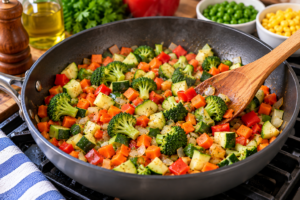
Heat the olive oil in a large skillet over medium heat.
Add the onion and carrot and cook for about 3–4 minutes, stirring occasionally. Add the bell pepper, zucchini, and broccoli.
Continue cooking for another 4–5 minutes, until the vegetables have started to soften but still retain some texture.
Stir in the peas and sweetcorn and cook for another minute.
Remove the skillet from the heat.
3. Make the Egg Mixture
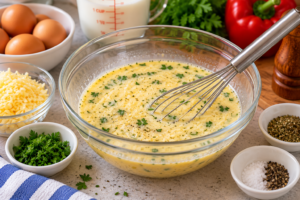
Crack the eggs into a large mixing bowl and whisk until combined.
Pour in the milk and whisk again.
Add about half of the grated cheese, parsley, mixed herbs, black pepper, and salt. Stir until evenly combined.
This mixture forms the soft savory base of the Vegetable Flan.
4. Assemble the Flan
Spread the cooked vegetables evenly across the prepared baking dish.
Slowly pour the egg mixture over the vegetables, making sure it reaches all areas of the dish.
Gently move the vegetables with a spoon if necessary so they’re distributed evenly.
Scatter the remaining grated cheese over the top.

5. Bake
Place the dish on the middle rack of the preheated oven.
Bake for approximately 30–35 minutes, or until the center has set and the top is lightly golden.
The middle shouldn’t look liquid when the dish is gently moved.
Remove from the oven and allow the flan to rest for 5–10 minutes before slicing. Resting makes it easier to cut into clean portions.

How to Prevent a Watery Vegetable Flan
Excess moisture is one of the biggest problems when making recipes containing both eggs and vegetables.
Vegetables such as zucchini naturally release water as they cook. That’s why sautéing the vegetables before adding them to the baking dish is useful. It begins the cooking process and allows some moisture to evaporate.
If you’re using frozen vegetables, thawing and draining them first can also help.
Avoid filling the dish with vegetables that are still sitting in cooking liquid. Drain away any obvious liquid before assembling the flan.
Fresh vs. Frozen Vegetables
Both can work well.
Fresh vegetables give you greater control over texture and are particularly useful for zucchini, peppers, carrots, and broccoli.
Frozen peas and sweetcorn are convenient because they require very little preparation. Other frozen vegetable combinations can also work, but excess water needs to be considered.
If using a frozen vegetable mix, thaw it and drain it thoroughly before adding it to your Vegetable Flan.
Easy Vegetable Swaps
This recipe doesn’t require exactly the same vegetable combination every time.
Mushrooms, spinach, asparagus, cauliflower, or finely chopped green beans can all be considered depending on what you have available.
For spinach, cook it first and squeeze or drain away excess liquid. Mushrooms should also be cooked before assembling the flan because they release considerable moisture.
Try to keep the overall amount of vegetables reasonably similar when making substitutions so you don’t overwhelm the egg mixture.
How to Know When the Flan Is Done
The outer edges generally set before the center.
Look at the center of the dish rather than judging doneness only by the golden cheese on top. The center should appear set rather than wet or liquid.
If the top is browning faster than the center is cooking, loosely covering the dish with foil can help protect the surface while the middle finishes.
Avoid unnecessarily overbaking it. Eggs continue to firm slightly from residual heat after the dish leaves the oven.
Cook the flan until the center is fully set. For food safety, egg dishes should reach an internal temperature of 160°F (71°C), measured with a food thermometer. For more information, see the USDA’s egg safety guidance.
What to Serve With Vegetable Flan
A slice can be served with a simple green salad for a light lunch or dinner.
For a more substantial meal, pair it with roasted potatoes, a simple tomato salad, or whole-grain bread.
Because the flan already contains several vegetables, you don’t need complicated side dishes. A simple accompaniment usually works best.
Looking for another comforting vegetable-packed meal? Try our Chicken & Vegetable Soup for an easy lunch or dinner.
Make-Ahead Tips
You can chop most of the vegetables earlier in the day and keep them refrigerated in covered containers.
The vegetables can also be sautéed ahead of time. Let them cool and refrigerate them until you’re ready to assemble the recipe.
For the best texture, prepare the egg mixture shortly before assembling and baking.
This makes Vegetable Flan practical when you want to reduce preparation work around dinner time.
Storage and Reheating
Allow leftovers to cool before transferring them to a covered container and refrigerating promptly.
Refrigerate leftover flan within 2 hours of cooking in a covered, shallow container. If the surrounding temperature is above 90°F (32°C), refrigerate it within 1 hour. Use refrigerated leftovers within 3–4 days and reheat portions to 165°F (74°C) before serving.
Individual portions are convenient because you can reheat only what you plan to eat.
When reheating, heat the flan thoroughly without cooking it for much longer than necessary, since excessive reheating can make an egg-based filling firmer and drier.
If you’re preparing the recipe specifically for leftovers, dividing the cooked flan into individual portions can make weekday lunches much easier.
Common Mistakes to Avoid
Using very wet vegetables: Excess liquid can prevent the filling from setting properly.
Skipping the vegetable sauté: Pre-cooking improves both texture and moisture control.
Overfilling the baking dish: Leave enough room for the egg mixture to surround the vegetables.
Using only the browned top to judge doneness: Check the center before removing the dish from the oven.
Cutting immediately: Give it 5–10 minutes to rest before slicing.
Frequently Asked Questions
Can I make Vegetable Flan without a crust?
Yes. This recipe is intentionally crustless, which keeps preparation straightforward.
Can I use different cheese?
Yes. A cheese that melts well can generally replace cheddar. Keep in mind that stronger cheeses can noticeably change the final flavor.
Can I add more vegetables?
You can make substitutions, but simply adding large amounts of extra vegetables may affect how well the egg mixture sets.
Why did my flan turn watery?
The vegetables may have released too much moisture. Pre-cooking watery vegetables and draining frozen vegetables can reduce this problem.
Can I prepare it ahead?
Yes. You can prepare several components in advance, and cooked leftovers can also be refrigerated for later meals.
Nutrition Information
Approximate nutrition per serving (1/6 of recipe):
Calories: ~190 kcal
Protein: ~11 g
Carbohydrates: ~11 g
Fat: ~12 g
Fiber: ~3 g
Sodium: ~300 mg
Nutrition values are estimates and will vary depending on the cheese, milk, vegetables, brands, and exact portion size.
Final Tips
For a reliable Vegetable Flan, focus on moisture control and avoid overcooking. Sauté the vegetables first, drain any excess liquid, distribute everything evenly, and give the finished dish a few minutes to rest before slicing.
The recipe is flexible enough for different vegetable combinations while still being straightforward enough for an everyday family meal.
2 thoughts on “Mixed Vegetable Flan”