

Tuna Pasta Bake: An Easy Family Dinner for Busy Weeknights
Introduction:
Tuna pasta bake is one of those dependable family dinners that works especially well when you need something filling, simple, and practical. Tender pasta, tuna, sweetcorn, spring onions, and a creamy cheese sauce are baked together until the top is golden and bubbling. Better still, much of the preparation can be done while the pasta cooks, so you are not spending the entire evening in the kitchen.
This recipe serves six and is particularly useful for busy households because most of the ingredients are inexpensive cupboard or fridge staples. The combination of tuna and pasta makes the dish satisfying, while sweetcorn and spring onions add colour, texture, and freshness.
What makes a good tuna pasta bake, however, is not simply mixing everything together. The consistency of the sauce, how far you cook the pasta before baking, and when you add the cheese all affect the final result. Below, you’ll find the original ingredients and cooking method, followed by practical tips to help you get a creamy rather than dry pasta bake.
This Tuna Pasta Bake is especially useful when you want a comforting dinner made with simple pantry ingredients.
Prep time: 15 minutes
Cook time: 35 minutes
Serves: 6
Ingredients
- 350g fusilli pasta
- 1 tbsp extra virgin olive oil
- 1 large onion, chopped
- 2 garlic cloves, crushed
- 25g plain flour
- 300ml semi-skimmed milk
- 100ml fish stock
- 100g half-fat Cheddar cheese, grated
- 2 × 160g tins tuna in spring water, drained
- 340g can sweetcorn, drained
- 3 spring onions, trimmed and finely sliced
- Calorie-controlled cooking spray
Instructions
1. Cook the pasta
- Preheat the oven to 200°C, fan 180°C, gas mark 6.
- Bring a large pan of salted water to the boil and add the pasta. Cook for 10–12 minutes, until just tender. Drain well and return the pasta to the pan, reserving a little of the pasta water.
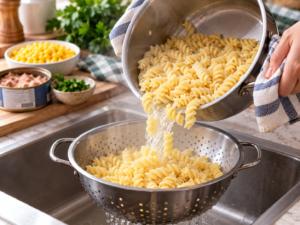
2. Make the sauce
- Heat the olive oil in a large pan over medium heat. Add the chopped onion and cook until softened, then add the crushed garlic and cook briefly. Stir in the flour and cook for 1 minute.
- Add a splash of the milk and stir to form a smooth paste, then gradually whisk in the remaining milk using a wooden spoon.
- Cook for 5 minutes, stirring often, until the sauce thickens and starts to bubble.
- Remove from the heat and stir in half the cheese. Season to taste.
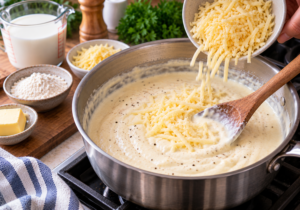
3. Assemble and bake
- Add the tuna and sweetcorn to the pasta and toss together.
- Add the sauce and mix well.
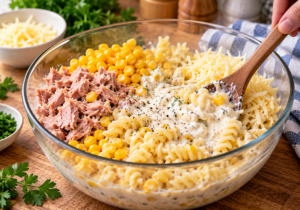
Bake:
- Spoon the mixture into a 2-litre ovenproof dish and sprinkle the remaining grated cheese evenly over the top.
- Mist the top with cooking spray, then bake for 15–20 minutes until golden.
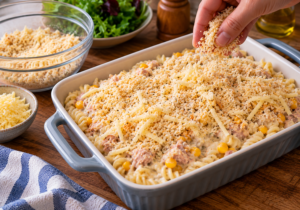
Serve with the salad leaves.
How to Get a Creamy Tuna Pasta Bake Instead of a Dry One
- The biggest problem with many pasta bakes is that they look creamy before going into the oven but come out dry. This happens because pasta continues absorbing liquid while it bakes.
- The first thing to watch is the pasta. Don’t cook it until extremely soft before assembling the dish. It should be just tender because it will continue cooking in the oven.
- The sauce also needs to be smooth and creamy before you mix it with the pasta. When adding milk to the flour mixture, begin with a small amount and stir until smooth before gradually adding the rest. Adding all the milk at once can make it more difficult to remove lumps.
- Once the sauce starts thickening, keep stirring it regularly, especially around the bottom and edges of the pan.
- If your pasta mixture seems unusually thick before it goes into the baking dish, a small amount of the reserved pasta water can help loosen it. Add only a little at a time—you want a creamy mixture rather than a watery one.
Why Fusilli Works Well
- Fusilli is particularly useful in a creamy pasta bake because its spiral shape catches the sauce, small pieces of tuna, and sweetcorn.
Fusilli works particularly well in this Tuna Pasta Bake because the spirals hold onto the creamy sauce.
- You don’t necessarily need to buy fusilli specifically for this recipe, though. If you already have another short pasta shape in the cupboard, such as penne or rigatoni, it can work too.
- Long pasta such as spaghetti is less convenient because it doesn’t distribute through a casserole-style dish as evenly.
- Using what you already have is also a simple way to make this meal more practical and reduce unnecessary food waste.
Don’t Skip Draining the Tuna and Sweetcorn
This is a small step that can make a noticeable difference.
Drain both the tuna and sweetcorn thoroughly before adding them to the pasta. Excess liquid can thin the cheese sauce and may collect at the bottom of the baking dish.
After opening the tuna, allow it to drain properly rather than immediately tipping it into the pasta. Do the same with the sweetcorn.
When adding the tuna, break it into bite-sized flakes rather than crushing it completely. This gives the finished pasta bake a better texture and allows you to get recognizable pieces of tuna throughout each serving.
Getting the Crispy Golden Topping Right
The contrast between creamy pasta underneath and a lightly crisp topping is one of the best parts of a pasta bake.
Combining breadcrumbs with the remaining grated cheese gives the surface more texture than cheese alone. Spread the topping relatively evenly so that one area doesn’t end up with a thick layer while another is uncovered.
The pasta bake is ready when the filling is piping hot and bubbling and the topping has turned golden.
Avoid leaving it in the oven considerably longer simply because you want a darker top. Extended baking can cause the sauce underneath to dry out.
If the top is colouring too quickly while the centre still needs more time, loosely covering the dish can help prevent excessive browning.
A Practical Weeknight Prep Strategy
You can make this recipe easier by doing several jobs at the same time rather than completing each one separately.
Start heating the pasta water first. While the water comes to the boil and the pasta cooks, prepare the other ingredients and begin making the sauce.
Drain the tuna and sweetcorn before you need them and grate the cheese in advance. Having everything ready makes assembling the final dish much faster.
Once the pasta is drained and the sauce is finished, you simply need to combine the ingredients, add the topping, and transfer the dish to the oven.
This approach is especially useful on busy evenings because the oven time becomes mostly hands-off cooking time.
Common Tuna Pasta Bake Mistakes
Overcooking the pasta: Remember that pasta continues cooking in the oven. Starting with very soft pasta can result in a mushy finished dish.
Making the sauce too thick: A sauce that is already extremely thick before baking may become even thicker as the pasta absorbs moisture.
Adding milk too quickly: Gradually incorporating the milk makes it easier to produce a smooth sauce.
Not draining canned ingredients: Water from tuna or sweetcorn can unnecessarily dilute the sauce.
Overbaking: Once the dish is hot throughout and the topping is golden, it doesn’t need extra oven time.
Unevenly distributing the tuna: Gently tossing the ingredients before adding the sauce helps ensure every portion contains pasta, tuna, and vegetables.
A successful Tuna Pasta Bake should stay creamy inside while developing a lightly crisp, golden topping.
What to Serve With Tuna Pasta Bake
Because this is already a substantial meal, the easiest accompaniment is something fresh and simple.
A green salad works particularly well and adds a crisp contrast to the creamy pasta. You could use mixed salad leaves, cucumber, tomatoes, or whatever fresh vegetables you already have.
Steamed green vegetables such as broccoli or green beans are another practical option.
There is no need to prepare several complicated side dishes. One fresh vegetable side is usually enough to turn the pasta bake into a complete family meal.
For another easy family meal, try our Mixed Vegetable Flan, packed with colorful vegetables and a golden cheesy topping.
Storing Leftovers Safely
If you have leftovers, don’t leave the pasta bake sitting at room temperature for an extended period. Refrigerate leftovers promptly in a covered container.
Refrigerate leftover tuna pasta bake within 2 hours of cooking in a shallow, covered container. Use refrigerated leftovers within 3–4 days. Reheat portions until they reach 165°F (74°C) throughout, checking the center with a food thermometer.
Because this recipe contains cooked tuna and a milk-based sauce, good food-storage practices are particularly important.
When reheating leftovers, heat them thoroughly until steaming hot throughout. Reheating an individual portion rather than repeatedly reheating the whole baking dish is more practical when only one person needs a serving.
The sauce may thicken considerably in the refrigerator because the pasta continues absorbing moisture. Adding a small splash of milk before reheating can help restore some creaminess.
Leftover Tuna Pasta Bake can be stored in the refrigerator and reheated for another meal.
For additional guidance on storing cooked food safely, see the USDA’s recommendations for handling leftovers.
Frequently Asked Questions
Can I use a different pasta shape?
Yes. Other short pasta shapes can be used if you don’t have fusilli. Penne and rigatoni are particularly suitable because they hold creamy sauces well.
Why did my tuna pasta bake turn out dry?
Common causes include overcooking the pasta before baking, making the sauce too thick, or leaving the assembled dish in the oven for too long.
Can I prepare the ingredients ahead of time?
Yes. You can grate the cheese and prepare the ingredients earlier. If assembling the complete dish ahead of baking, keep it refrigerated and remember that a chilled pasta bake may require additional time to heat completely through.
How do I know when it is ready?
Look for a golden topping, bubbling sauce around the edges, and a piping-hot centre.
Should I rinse the pasta after cooking it?
There is usually no need. Drain it well and combine it with the other ingredients as directed.
Final Tips
For the best tuna pasta bake, focus on three things: don’t overcook the pasta, keep the cheese sauce creamy, and don’t overbake the finished dish.
It is a straightforward recipe, but those small details make the difference between dry baked pasta and a creamy filling underneath a crisp, golden topping.
With a little attention to the pasta and sauce, this Tuna Pasta Bake becomes an easy, satisfying family dinner.
It is also an adaptable meal for nights when you want to rely mostly on ingredients already in the cupboard. Prepare a simple salad or green vegetable alongside it, and you have an uncomplicated family dinner that doesn’t require hours of preparation.
1 thought on “Tuna Pasta Bake”