
How to Stay Hydrated Throughout the Day:
Simple Everyday Tips
Introduction:
Staying hydrated sounds easy until a busy day gets in the way. You start the morning with coffee, rush through work, run errands, and suddenly realize late in the afternoon that you have barely had any water.
The solution is not to force yourself to drink huge amounts at once or carry the biggest water bottle you can find. A better approach is to make hydration part of your normal routine.
Your body needs water for everyday functions such as regulating temperature, moving nutrients, removing waste, and keeping tissues functioning normally. But hydration needs are not exactly the same for everyone. Activity level, weather, diet, age, pregnancy, breastfeeding, illness, and certain health conditions can all affect how much fluid a person needs.
Instead of focusing on a perfect number, use these practical habits to stay hydrated more consistently throughout the day.
1. Start With a Simple Morning Hydration Habit
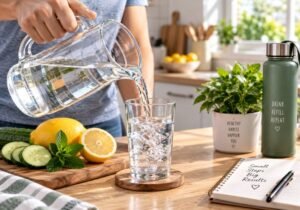
You do not need an elaborate morning routine. Choose one activity you already do every morning and connect water to it.
For example:
- Drink some water while preparing breakfast.
- Fill your bottle before making coffee.
- Keep a glass beside the kitchen sink.
- Take your filled bottle with you when leaving home.
Remember, consistency is very important.
If mornings are rushed, prepare your bottle the night before and leave it somewhere obvious, such as beside your keys, work bag, or coffee maker.
This removes one small decision from your morning.
There is no need to force yourself to drink a huge amount immediately after waking. The purpose is simply to create your first easy hydration opportunity instead of accidentally going several hours without drinking.
2. Build a Routine That Helps You Stay Hydrated
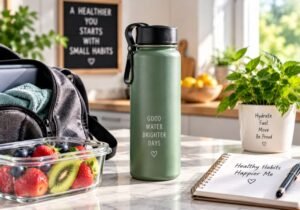
One of the biggest hydration problems is relying on memory.
“Remember to drink more water” sounds simple, but it is easy to forget when you are concentrating on work, caring for children, driving, cleaning, or running errands.
A more realistic system is to connect drinking with activities that already happen every day.
For example:
Breakfast: Have water available with your meal.
Starting work: Put a filled bottle on your desk.
Lunch: Have a drink with your meal.
Afternoon break: Check your bottle and refill it if necessary.
Exercise: Keep water available before, during, and after activity as appropriate.
Dinner: Put water on the table instead of remembering afterward.
You do not have to follow a strict hourly drinking schedule.
Think in terms of hydration checkpoints rather than alarms every 30 minutes. Your existing routine becomes the reminder.
3. Make Water Almost Impossible to Forget
Sometimes the problem is not motivation. It is simply convenience.
Imagine two situations.
In the first, your water bottle is downstairs in the kitchen while you work upstairs.
In the second, a filled bottle is sitting directly beside your laptop.
Which situation makes you more likely to drink?
Make the healthy choice the easy choice.
Keep water where you actually spend your time.
The CDC also recommends carrying a reusable water bottle as a simple way to make drinking water easier throughout the day.
- If you work from home, keep it at your desk.
- If you regularly drive, take a bottle with you.
- If you spend evenings in the living room, bring your water with you instead of leaving it in the kitchen.
You can also choose a bottle that fits your routine. A huge bottle is not automatically better. If it is heavy, difficult to clean, or inconvenient to carry, you may use it less.
The best bottle is the one you regularly refill, carry, and drink from.
4. Make Plain Water More Enjoyable
If you find it difficult to stay hydrated because you dislike plain water, repeatedly telling yourself to “drink more” may not solve the problem.
Make it more appealing.
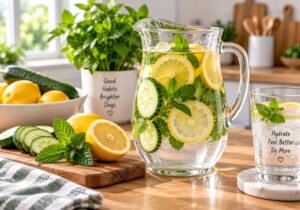
Try chilled water if you prefer cold drinks, or room-temperature water if cold water discourages you from drinking. You can also add fresh ingredients such as lemon, lime, cucumber, mint, or berries for flavor.
Another useful strategy is variety.
Water can remain your main everyday option without being your only source of fluids. Other beverages and foods also contribute fluid to your diet.
Water-rich foods can include:
-
Watermelon
-
Oranges
-
Strawberries
-
Cucumber
-
Tomatoes
-
Lettuce
-
Melons
-
Soups and broths
Hydration is also connected with your overall eating habits. You can learn more about balanced food choices in our guide on What Makes a Healthy Diet? The Essential Components Explained.

5. Adjust Your Routine on Hot or Active Days
Your usual routine may not be enough to help you stay hydrated on every type of day. A quiet day working indoors is different from spending hours gardening outside in summer. A short walk is different from a long workout.
Hot weather, physical activity, and sweating can increase fluid needs.
That means you should think ahead.
If you are going for a long walk, working outside, exercising, traveling, or spending a hot afternoon outdoors, take water with you rather than assuming you will find it later.
A practical habit is to ask yourself before leaving home:
“Will I have easy access to water where I’m going?”
If the answer is no, bring some.
This simple question is especially useful during road trips, outdoor events, hiking, sports, gardening, and summer activities.
Do not wait until you return home to think about everything you should have drunk during the day.
Regular physical activity supports overall health too. If you’re working on becoming more active, you may also like our guide to everyday habits for strong bones and better bone health.
6. Do Not Depend on a Single “Perfect” Water Number
You have probably heard that everyone needs exactly eight glasses of water each day. It is an easy rule to remember, but hydration is more individual than that. Your total fluid intake can come from drinking water, other beverages, and foods. Your needs can also change depending on your activity, environment, health, and other factors. This is why chasing an exact number can sometimes distract from the more useful question:
Are you consistently giving your body opportunities to get enough fluid throughout the day?
Instead of becoming obsessed with ounces, focus on patterns.
- Did you drink anything during your busy morning?
- Did you have water available at lunch?
- Have you been active or sweating?
- Is the weather unusually hot?
- Have you gone several hours without drinking?
These questions help you respond to your actual day rather than blindly following a number that may not fit every situation.
7. Learn From the Part of the Day When You Forget
If you consistently struggle to stay hydrated, identify when the problem happens.
- Maybe you drink plenty in the morning but forget all afternoon.
- Perhaps you are good at drinking water at home but forget whenever you leave.
- Or you may keep carrying the same nearly full bottle around all day.
For three days, simply notice when your hydration routine falls apart.
Then solve that specific problem.
If afternoons are the problem: Refill your bottle with lunch.
If you forget while driving: Put a filled bottle in your bag before leaving.
If water is always in another room: Keep it beside your normal workspace.
If plain water feels boring: Experiment with temperature or natural flavor.
If you forget during meetings: Take a few drinks before and after each meeting rather than trying to interrupt one.
This is more useful than downloading another reminder app without understanding why your current routine is failing.
A Realistic Hydration Routine for a Busy Day
Here is a simple routine that can help you stay hydrated on a busy day without following a rigid schedule.
Morning: Fill your bottle and have some water with breakfast.
Mid-morning: Keep water visible while working and drink according to your needs.
Lunch: Have water available with your meal and refill your bottle afterward.
Afternoon: Use your normal afternoon break as a hydration checkpoint. Add a water-rich fruit or vegetable to your snack if you enjoy one.
Exercise or outdoor activity: Bring water and adjust your fluid intake based on your activity, temperature, and sweating.
Dinner: Have water available with your meal.
Evening: Drink according to thirst and your individual needs rather than suddenly trying to make up for everything you missed during the day.
Notice that this routine does not require constant alarms or complicated tracking.
It simply puts hydration opportunities throughout a normal day.
Common Hydration Mistakes to Avoid
Trying to catch up at night: If you forget all day, drinking a large amount immediately before bed is not an ideal routine. Spread opportunities across the day instead.
Forcing yourself to hit an arbitrary target: More water is not automatically better. Extremely excessive water intake can also be harmful.
Ignoring activity and weather: Your routine may need adjustment when you are exercising, sweating heavily, or spending time in hot conditions.
Making hydration inconvenient: It is much harder to stay hydrated when your water is out of sight or difficult to access. Keep your bottle somewhere visible and convenient.
Assuming only plain water counts: Foods and other beverages can contribute fluids too, although water remains a simple everyday choice.
Turning hydration into a complicated project: Most people do not need a spreadsheet full of hourly targets. A few repeatable habits can be much easier to maintain.
Try This Simple 7-Day Hydration Check
For one week, focus on behavior rather than perfection.
Each evening, ask yourself four questions:
Did I have water available during my busiest part of the day?
Did I drink with at least some of my meals?
Did I adjust for exercise, heat, or extra activity?
What caused me to forget today?
Do not judge the day as a success or failure.
Look for patterns.
If you repeatedly forget during the afternoon, your solution might be as simple as refilling your bottle at lunch. If weekends are difficult because your routine changes, keep a bottle in the car or prepare one before leaving home.
At the end of seven days, you should have a much clearer idea of which hydration habit actually needs improvement.
When General Hydration Advice May Not Apply
Hydration is not one-size-fits-all.
Certain medical conditions, medications, pregnancy, breastfeeding, illness, and other circumstances can affect fluid needs. Some people may even be advised by a healthcare professional to limit their fluid intake.
If you have been given specific instructions about fluids, follow that personalized medical guidance rather than a general hydration routine from the internet.
Persistent or concerning symptoms should also not automatically be treated by simply drinking more and more water. Seek appropriate medical advice when needed.
Final Thoughts
Learning to stay hydrated does not require turning your day into a water-drinking challenge.
2 thoughts on “Stay Hydrated Simple Everyday Tips”