

What Makes a Healthy Diet? The Essential Components Explained
Eating a healthy diet can sound more complicated than it needs to be. One week carbohydrates are the problem, the next week everyone is talking about protein, and social media constantly introduces new foods that are supposedly essential for better health.
In reality, healthy eating is usually less about finding one “perfect” food and more about the overall pattern of what you eat.
A variety of fruits, vegetables, grains, meals high in protein, and suitable dairy or fortified substitutes are all part of a balanced diet. Additionally, it accommodates everyday life, culture, budget, and personal preferences. Similar emphasis is placed on variety and nutrient-dense food choices rather than depending solely on one item or nutrient in the current U.S. dietary guidelines.
Instead of trying to completely rebuild your meals overnight, it can be more practical to understand the basic components of a healthy diet and improve them one at a time.
1. Make Vegetables and Fruits a Regular Part of Your Meals
Vegetables and fruits provide vitamins, minerals, fiber, and many other naturally occurring compounds. The goal does not have to be an elaborate salad at every meal. Think about where produce can naturally fit into foods you already eat.

You might add berries or sliced banana to breakfast, keep an apple with lunch, add tomatoes and lettuce to a sandwich, serve roasted vegetables with dinner, or keep frozen vegetables available for busy evenings.
Variety matters too. Instead of eating the same vegetable every day, rotate between leafy greens, carrots, peppers, broccoli, tomatoes, squash, peas, and other options you enjoy.
Fresh produce is not the only useful choice. Frozen and canned fruits and vegetables can also make a healthy diet more realistic, especially when fresh produce is expensive, unavailable, or likely to spoil before you use it. USDA guidance specifically includes fresh, frozen, canned, and dried options.
Practical habit: Before planning an entire meal, ask, “What fruit or vegetable can I add to this?”
That question is often easier to act on than trying to design a perfect meal from scratch.
2. Include a Useful Source of Protein
Protein is another important part of everyday nutrition, but it does not need to come from the same source at every meal.
Common options include:
Fish and seafood
Chicken and other lean meats
Eggs
Beans and lentils
Tofu and other soy foods
Nuts and seeds
Yogurt and other appropriate dairy foods

USDAguidance encourages varying protein choices rather than depending on only one source.
A practical approach is to identify the protein source when building a main meal.
For example, a bowl of vegetables and rice can become a more complete meal when you add beans, lentils, chicken, fish, eggs, or tofu.
You also do not need to make every meal extremely high in protein. The amount an individual needs varies, and more is not automatically better.
The bigger goal is consistency and variety within your overall eating pattern.
3. Choose Carbohydrates With More to Offer
Carbohydrates are often treated as something that must be avoided, but foods containing carbohydrates vary considerably in their nutritional value.
Whole grains such as oats, brown rice, whole-wheat bread, barley, and whole-grain pasta can contribute fiber and nutrients to a healthy diet. Beans, fruit, and many vegetables also contain carbohydrates along with other useful nutrients.
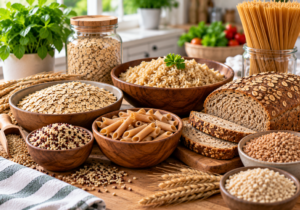
USDA’s MyPlate guidance recommends making at least half of grain choices whole grains.
That does not mean every grain you eat has to be whole grain.
Instead, look for easy substitutions that you genuinely like. You might choose oatmeal at breakfast, use whole-grain bread for some sandwiches, or occasionally replace white rice with brown rice or another whole grain.
A change that you can comfortably repeat is more useful than an “ideal” choice you dislike and quickly abandon.
4. Do Not Forget Healthy Sources of Fat
Fat is another nutrient that sometimes gets an unnecessarily bad reputation.
Dietary fat is part of a balanced eating pattern, but the type and overall food source matter.

Foods such as nuts, seeds, avocado, olives, certain fish, and plant oils can fit into everyday meals. Instead of thinking about fat as something you must eliminate, think about where it comes from.
For example, you might add a small handful of nuts to oatmeal, use seeds on a salad, include avocado in a sandwich, or cook vegetables with an appropriate amount of plant oil.
At the same time, a healthy diet does not require adding large quantities of oils, nuts, or avocado to every meal simply because they are considered nutritious foods.
Balance still matters.
5. Build Meals Instead of Chasing “Superfoods”
One of the easiest ways to make healthy eating confusing is to focus too much on individual foods.
Blueberries may be nutritious. So are beans. So are vegetables, whole grains, nuts, fish, and many other ordinary foods.
But no single ingredient can compensate for an unbalanced overall eating pattern.

A more practical strategy is to look at the meal as a whole.
Imagine a simple dinner of grilled chicken, brown rice, roasted broccoli, and a piece of fruit. Another meal could be lentil soup, whole-grain bread, salad, and yogurt.
Neither meal needs an expensive powder, supplement, detox drink, or fashionable ingredient to become useful.
This is one of the most important principles of a sustainable healthy diet: ordinary foods can work very well when they are combined thoughtfully.
For more practical ideas, read our guide on how to stay hydrated throughout the day.
6. Pay Attention to Drinks Too
People often evaluate what is on their plate while forgetting what is in their glass.
Water is a practical everyday beverage choice, while other drinks can contribute substantial added sugar depending on the product and portion.
You do not have to create strict rules around every beverage. Instead, look at what you drink most often.
If sweetened drinks are an everyday habit, gradually replacing some of them with water can be a realistic improvement.
Coffee and tea can also fit into many people’s routines, but what gets added to them can make a difference. A coffee containing large amounts of flavored syrup, cream, and sugar is nutritionally different from plain coffee or coffee with a modest addition.
If remembering water is difficult for you, building hydration around meals and routines can make it easier rather than trying to drink a large amount all at once.
7. Leave Room for Foods You Enjoy
A healthy diet does not have to mean eating perfectly every day.
Birthday cake, restaurant meals, dessert, pizza, or your favorite snack do not automatically ruin an otherwise balanced eating pattern.

What matters more is what your routine looks like over time.
Trying to eliminate every food you consider “unhealthy” can also make eating unnecessarily difficult. A more realistic question is:
What foods make up most of my usual meals and snacks?
If vegetables, fruits, whole grains, varied protein foods, and other nutrient-dense choices regularly appear in your routine, an occasional treat does not need to become a crisis.
Healthy eating should be sustainable enough to work during normal life—not only during your most disciplined week.
A Realistic One-Day Example
Here is an example rather than a meal plan you must follow.
Breakfast: Oatmeal topped with berries and nuts, with plain yogurt on the side.
Lunch: Whole-grain wrap with chicken or beans, lettuce, tomato, and other vegetables, plus fruit.
Snack: Apple with a small handful of nuts, or yogurt with fruit.
Dinner: Fish, tofu, chicken, or lentils with brown rice or another grain and roasted vegetables.
Drinks: Water throughout the day, with other unsweetened drinks according to preference.
Your meals may look completely different because of culture, budget, allergies, vegetarian preferences, work schedules, or the foods available where you live.
That is fine. The useful part is the structure, not copying the exact menu.
Common Healthy-Eating Mistakes to Avoid
Changing everything on Monday: A complete diet overhaul is difficult to maintain. Improve one or two repeated meals first.
Thinking expensive means healthier: Beans, lentils, oats, frozen vegetables, canned vegetables, eggs, and seasonal produce can all be useful everyday foods.
Buying healthy food without a plan: Spinach in your refrigerator does little good if it spoils every week. Buy foods you know how and when you will use.
Depending on one “healthy” food: A green smoothie or salad cannot define your entire eating pattern.
Ignoring portions completely: Nutritious foods still do not need to be eaten without limit.
Making meals too complicated: Healthy meals can be extremely simple. A protein source, vegetables, a grain or other carbohydrate food, and fruit can be enough.
Expecting perfection: One unusual meal does not determine the quality of your overall diet.
Try This 7-Day Healthy Diet Check
For one week, do not count every calorie or try to eat perfectly. Simply observe your normal routine.
At the end of each day, ask yourself:
- Did I eat at least a few different fruits or vegetables?
- Did my main meals contain a useful protein source?
- Did I include whole-grain or other nutrient-dense carbohydrate choices?
- Was water one of my main drinks?
- Did I eat because I was genuinely hungry, or mostly because food was convenient and visible?
- Which meal was hardest to balance?
After seven days, look for the most repeated problem.
Maybe breakfast rarely contains protein. Perhaps vegetables disappear at dinner when you are busy. Maybe you buy lunch every workday because nothing is prepared.
Fix that one repeated problem first.
That creates a practical improvement rather than another temporary diet.
When General Nutrition Advice May Not Be Enough
General healthy-eating guidance is not appropriate for every medical situation.
People with food allergies, digestive disorders, kidney disease, diabetes, eating disorders, nutrient deficiencies, pregnancy-related nutrition needs, or other medical conditions may require individualized advice.
A registered dietitian or qualified healthcare professional can help adapt eating patterns to specific medical and nutritional needs.
Final Thoughts
A healthy diet does not need to be perfect, expensive, or complicated.
Start with the foods you already eat and improve the overall pattern: include more variety, make fruits and vegetables easier to use, choose useful protein sources, include whole grains regularly, pay attention to drinks, and leave reasonable room for foods you enjoy.
Most importantly, choose habits that still work on busy weekdays, not just when you have extra time.
Small improvements repeated for months are more valuable than a “perfect” meal plan that lasts for a week.
This article provides general educational information and is not a substitute for personalized medical or nutrition advice.