
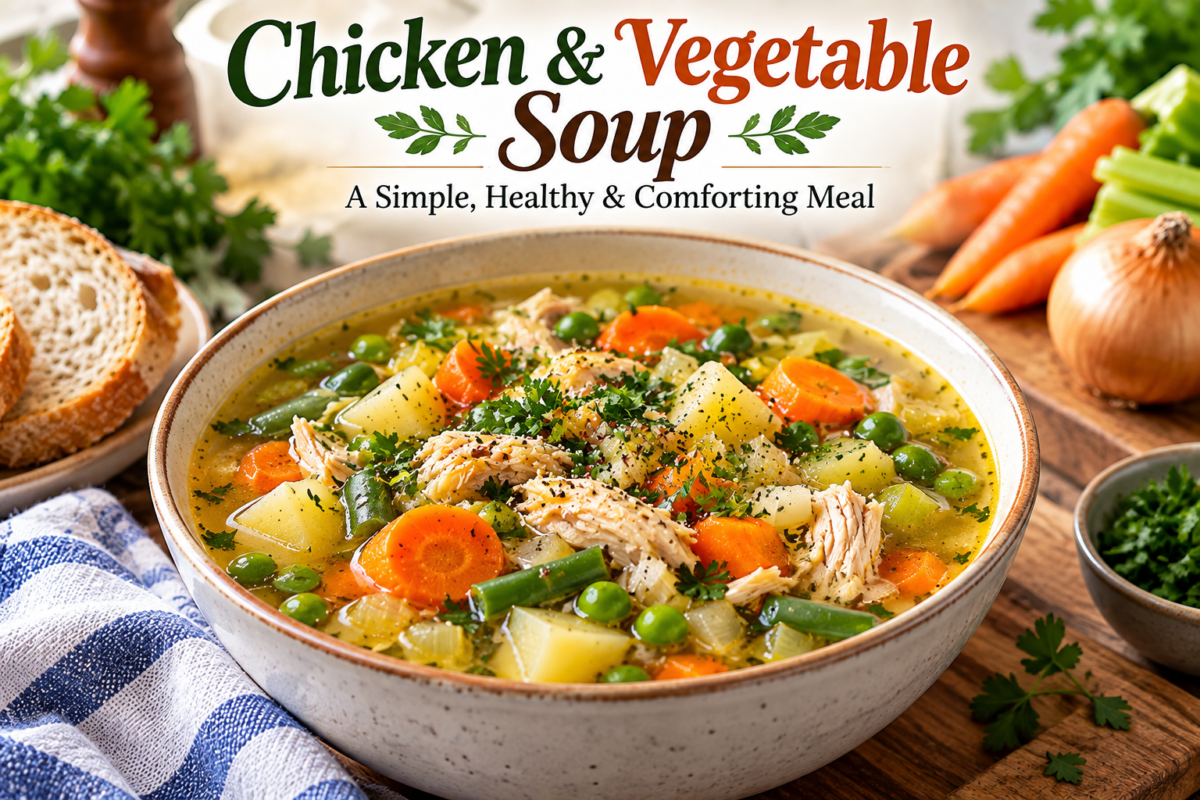
Chicken & Vegetable Soup: A Simple, Comforting Homemade Meal
Chicken & Vegetable Soup is the kind of practical recipe worth keeping for days when you want a warm, filling meal without making dinner complicated. Tender chicken, plenty of vegetables, herbs, and a flavorful broth come together in one pot, making it suitable for a straightforward lunch or family dinner.
The real advantage of homemade chicken soup is flexibility. You can prepare the vegetables while the chicken cooks, adjust the consistency depending on whether you prefer a brothy or hearty soup, and make enough for leftovers. It is also a useful recipe for using vegetables already sitting in the refrigerator.
The key to a good Chicken & Vegetable Soup is building flavor gradually rather than simply boiling everything together. Softening the onion, carrot, and celery first creates a better base, while adding delicate vegetables later prevents them from becoming overly soft.
This Chicken & Vegetable Soup is also easy to adapt depending on the vegetables you already have at home.
Prep Time: 15 minutes
Cook Time: 35 minutes
Total Time: 50 minutes
Servings: 6
Ingredients
- 1 tbsp olive oil
- 1 medium onion, finely chopped
- 2 garlic cloves, minced
- 2 medium carrots, peeled and sliced
- 2 celery stalks, sliced
- 1 medium potato, peeled and cut into small cubes
- 1 small zucchini, chopped
- 1 cup green beans, trimmed and chopped
- 1 lb (450g) boneless, skinless chicken breast or thighs
- 6 cups (1.4 litres) low-sodium chicken broth
- 1 tsp dried thyme
- 1 tsp dried parsley
- ½ tsp dried oregano
- 1 bay leaf
- Salt and freshly ground black pepper, to taste
- 1 cup frozen peas
- 1–2 tbsp fresh parsley, chopped
- Fresh lemon juice, optional, for serving
For the best Chicken & Vegetable Soup, prepare and measure the ingredients before you start cooking.
Instructions
1. Prepare the Vegetables
- Wash and prepare all the vegetables before you begin cooking. Finely chop the onion, slice the carrots and celery, cube the potato, and chop the zucchini and green beans into bite-sized pieces.
- Keeping the pieces reasonably similar in size helps them cook more evenly.

2. Build the Flavor Base
- Heat the olive oil in a large soup pot over medium heat.
- Add the chopped onion, carrots, and celery. Cook for about 5–6 minutes, stirring occasionally, until the onion begins to soften.
- Add the garlic and cook for another 30–60 seconds, stirring so it doesn’t burn.

3. Add the Chicken and Broth
- Add the chicken to the pot along with the chicken broth, potato, thyme, parsley, oregano, and bay leaf.
- Season lightly with salt and black pepper. If your broth already contains salt, start conservatively—you can always adjust the seasoning later.
- Bring the soup to a gentle boil, then reduce the heat to a simmer.
- Check the thickest part of the chicken with a food thermometer to confirm it has reached 165°F (73.9°C) before removing it from the broth.

4. Shred the Chicken
- Carefully remove the cooked chicken from the pot and transfer it to a clean cutting board or plate.
- Using two forks, shred the chicken into bite-sized pieces.
- Return the shredded chicken to the soup.

5. Add the Remaining Vegetables
- Add the zucchini and green beans.
- Continue simmering for approximately 8–10 minutes, or until the vegetables are tender but haven’t become mushy.
- Stir in the frozen peas during the final 2–3 minutes of cooking.
- Remove the bay leaf.
- Taste the soup and adjust the salt and pepper if necessary. Stir through the fresh parsley before serving. A small squeeze of fresh lemon juice can also brighten the finished soup.

Why the Order of the Vegetables Matters
One detail that can noticeably improve homemade vegetable soup is not adding every vegetable at the same time.
Potatoes and carrots are relatively firm and require longer cooking. Zucchini, peas, and some green vegetables cook considerably faster.
If everything goes into the pot at once, you can end up choosing between undercooked potatoes and overcooked zucchini.
That’s why this recipe adds the firmer vegetables earlier and the more delicate ones toward the end. You get vegetables that are tender while still maintaining some shape and texture.
Chicken Breast or Chicken Thighs?
Either works, but they produce slightly different results.
Chicken breast is lean and easy to shred. Because it can become dry when cooked too long, remove it as soon as it has cooked through.
Boneless chicken thighs contain more fat and generally remain juicy more easily during simmering. They’re a good alternative if you prefer richer chicken flavor.
Whichever you choose, the USDA recommends that poultry reach a safe minimum internal temperature of 165°F (73.9°C). A food thermometer inserted into the thickest part is the most reliable way to check doneness.
How to Keep Chicken Soup Flavorful
A watery-tasting soup isn’t necessarily caused by too much water. Often, the ingredients simply haven’t developed enough flavor.
Start by gently cooking the onion, carrot, and celery in olive oil rather than immediately covering raw vegetables with broth. This creates a more flavorful foundation.
Herbs should complement rather than dominate the soup. Thyme, parsley, oregano, and bay leaf provide background flavor while allowing the chicken and vegetables to remain the main ingredients.
Finally, taste before serving.
Broths vary significantly in saltiness, so a fixed amount of salt isn’t always appropriate. Season lightly early on and make the final adjustment once everything has finished cooking.
How to Avoid Overcooked Chicken
One common mistake with Chicken & Vegetable Soup is leaving the chicken simmering for the entire cooking process.
Once the chicken is cooked through, remove it and shred it. It can then go back into the soup while the remaining vegetables finish cooking.
Keep the soup at a gentle simmer rather than an aggressive boil. Hard boiling isn’t necessary and can make both the chicken and vegetables less pleasant in texture.
Adjusting the Soup Consistency
This recipe is intended to have plenty of broth, but you can easily adjust it.
For a heartier soup, add slightly more vegetables or allow the soup to simmer uncovered briefly. For a more broth-forward soup, add additional low-sodium chicken broth as needed.
Remember that leftovers may seem thicker the next day because the vegetables continue absorbing some liquid while refrigerated.
When reheating, adding a little broth can restore the original consistency.
Practical Meal-Prep Strategy
The chopping is the most time-consuming part of this recipe, so organizing that step makes everything else easier.
Prepare the onion, carrot, celery, and potato first because they’re needed early in the cooking process. While those ingredients cook, you can finish preparing the zucchini and green beans.
If you’re particularly short on time, vegetables can be washed and chopped earlier in the day and refrigerated in covered containers until you’re ready to cook.
Another useful approach is making the entire soup ahead. Soup often works well as a planned leftover meal because individual portions are easy to refrigerate and reheat.
Common Mistakes to Avoid
Boiling instead of simmering: Once the broth reaches a boil, reduce the temperature. A gentle simmer gives you better control over the chicken and vegetables.
Adding all vegetables together: Different vegetables have different cooking times. Add delicate vegetables later.
Overcooking the chicken: Check it once it has had sufficient cooking time instead of automatically leaving it in the pot until the very end.
Over-seasoning early: Chicken broth can already contain considerable sodium. Taste near the end before adding more salt.
Cutting vegetables inconsistently: A huge potato cube and a tiny carrot slice won’t cook at the same rate. Aim for reasonably uniform pieces.
Forgetting the bay leaf: Remove it before serving.
What to Serve With Chicken & Vegetable Soup
The soup can stand alone as a light meal, particularly because it already contains chicken, potatoes, and several vegetables.
If you want something alongside it, keep things simple. Crusty whole-grain bread works well for dipping, while a basic green salad can add a fresh contrast.
Looking for another simple family dinner? Try our Tuna Pasta Bake for an easy and comforting meal.
How to Store Leftovers
Divide leftover soup into shallow, covered containers and refrigerate within 2 hours of cooking. In temperatures above 90°F (32°C), refrigerate within 1 hour. Use refrigerated leftovers within 3–4 days. When reheating, bring the soup to a rolling boil. Refrigerate your leftovers at 40°F (4°C) or below.
For more details, see the USDA’s food safety guidance for leftovers.
According to USDA food-safety guidance, most cooked leftovers should generally be used within 3–4 days when properly refrigerated.
For convenient meal prep, divide the soup into individual portions rather than repeatedly heating the entire batch.
When reheating soup, the USDA advises bringing soups and sauces to a rolling boil during reheating.
If the refrigerated soup has thickened, add a small amount of broth or water while reheating.
“For additional guidance on safely storing and reheating leftovers, see the USDA’s food safety recommendations.”
Frequently Asked Questions
Can I use leftover cooked chicken?
Yes. Instead of cooking raw chicken in the broth, add already-cooked shredded chicken later in the process. It only needs enough time to heat thoroughly.
Can I change the vegetables?
Yes. This is an excellent recipe for using vegetables you already have. The important part is considering cooking time: firm vegetables should usually go in earlier and quick-cooking vegetables later.
Can I use frozen vegetables?
Yes. Many frozen vegetables work well in soup. Because they’re generally small and cook quickly, they usually don’t need as much simmering time as fresh root vegetables.
Why is my soup bland?
Check the seasoning first. A little additional salt may be needed depending on your broth. Fresh parsley or a squeeze of lemon at the end can also brighten the flavor without making the soup excessively salty.
Can Chicken & Vegetable Soup be made ahead?
Yes. It’s well suited to advance preparation. Refrigerate it safely and reheat only the amount you plan to eat.
Chicken & Vegetable Soup can be prepared ahead of time and refrigerated for later meals.
Nutrition Information
Approximate nutrition per serving (1/6 of recipe):
- Calories: ~250 kcal
- Protein: ~28 g
- Carbohydrates: ~20 g
- Fat: ~7 g
- Fiber: ~4 g
- Sodium: ~550 mg
Note: Nutrition values are estimates and will vary depending on the chicken cut, broth brand, exact vegetable quantities, and serving size.
Final Tips
A reliable Chicken & Vegetable Soup doesn’t require complicated ingredients. The difference comes from how you handle them:
soften the aromatic vegetables first, simmer rather than aggressively boil, cook the chicken only as long as necessary, and add quick-cooking vegetables toward the end.
Those small choices give you tender chicken, vegetables that haven’t turned to mush, and a broth with noticeably more flavor.
It’s also an adaptable recipe. Once you understand the basic cooking order, you can use what’s available in your refrigerator while still ending up with a balanced, comforting bowl of homemade soup.
Once you learn the basic method, Chicken & Vegetable Soup is easy to adjust with seasonal vegetables and your preferred herbs.
2 thoughts on “Chicken & Vegetable Soup”