
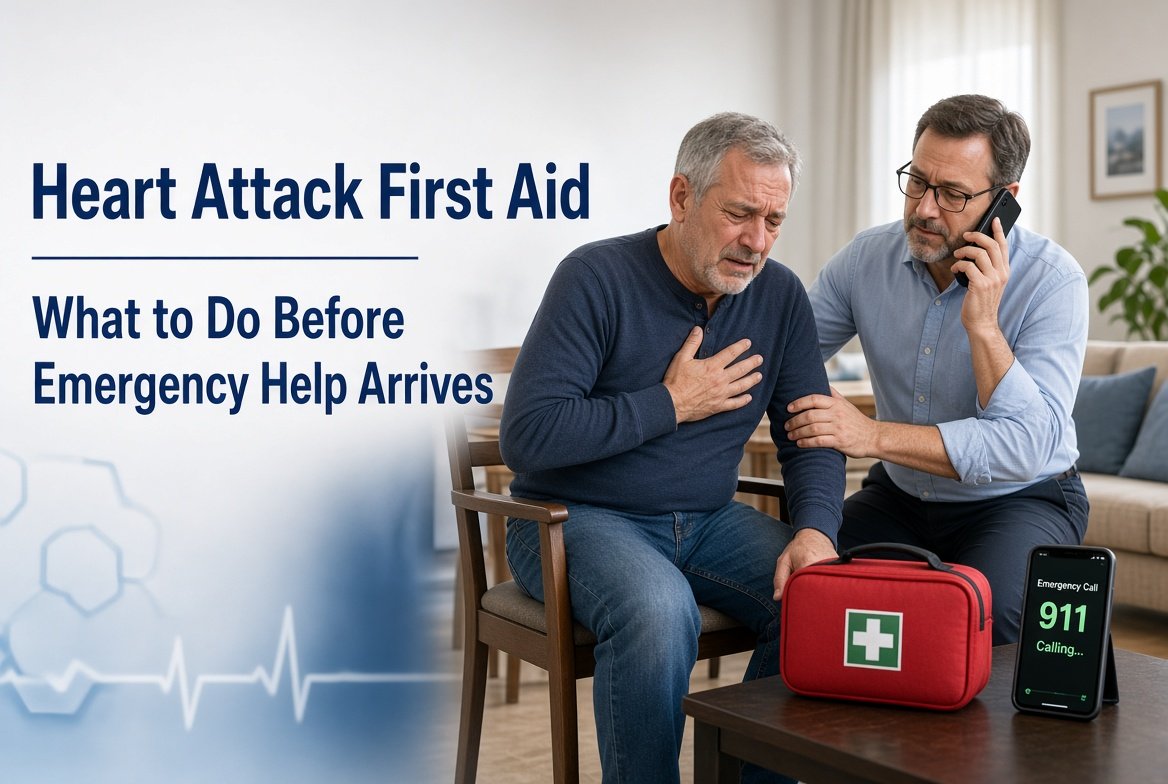
Simple Heart Attack Safety Tips and First Aid Steps Everyone Should Know
A heart attack can happen suddenly and requires quick attention. Knowing what to do during a suspected heart attack first aid can help you stay calm, support the person, and get medical help as quickly as possible.
You do not need to be a doctor or medical professional to provide basic help during a suspected heart attack. The most important things are recognising warning signs, calling emergency services, keeping the person comfortable, and staying with them until professional help arrives.
Many people delay getting help because they are unsure whether the symptoms are serious. However, acting quickly can make an important difference during a heart emergency.
What Happens During a Heart Attack?
A heart attack happens when blood flow to the heart is blocked or reduced. This can prevent the heart from getting enough oxygen.
A heart attack may happen suddenly, but sometimes warning signs appear earlier. Symptoms can be different from person to person, which is why it is important not to ignore unusual feelings or discomfort.
A person may experience strong chest pressure, but others may notice different signs such as tiredness, shortness of breath, or discomfort in other areas of the body.
Common Warning Signs of a Heart Attack
Recognizing the signs early is one of the most important parts of heart attack first aid.
Possible warning signs include:
Pressure, heaviness, squeezing, or pain in the chest
Pain spreading to the arm, shoulder, back, neck, jaw, or upper stomach
Trouble breathing
Cold sweating
Feeling weak or extremely tired
Nausea or vomiting
Feeling dizzy or lightheaded
A sudden feeling that something is seriously wrong
Some people may not have severe chest pain. This is why unusual symptoms should also be taken seriously.
You can learn more about common heart attack warning signs from the American Heart Association heart attack warning signs guide.
If someone has possible heart attack symptoms, do not wait to see if they go away.
Call Emergency Services Quickly
The first and most important step is to call emergency services.
In the United States, call 911. In other locations, use the appropriate emergency number.
Do not ask the person to wait or try to handle the situation alone.
When calling for help, provide simple information:
Your exact location
The person’s symptoms
When the symptoms started
Whether the person is awake and breathing normally
If someone else is nearby, ask them to make the call while you stay with the person.
Emergency responders can guide you and provide instructions while help is on the way.
Trusted medical information from the Mayo Clinic heart attack first aid guide can also help people understand emergency response steps.

Help the Person Sit and Stay Calm
A person having a possible heart attack may feel scared or uncomfortable.
Help them:
Sit down in a comfortable position
Rest and avoid unnecessary movement
Loosen tight clothing
Stay calm while waiting for help
Do not encourage them to walk around, exercise, or continue normal activities.
Staying calm and reducing physical effort can help prevent additional stress on the body.
Stay nearby and keep checking how they are feeling.

What You Should Not Do During a Heart Attack
Knowing what not to do is also important.
Do Not Ignore the Symptoms
Some people think the discomfort will disappear on its own. This can delay important medical care.
Even mild symptoms may need urgent attention.
Do Not Let the Person Drive
A person who may be having a heart attack should not drive themselves to a hospital.
Their condition could suddenly become worse while driving.
Calling emergency services is usually safer because medical help can begin during transportation.
Do Not Leave Them Alone
Do not leave the person by themselves.
Stay with them, keep them comfortable, and watch for changes in their condition.
Do Not Give Food or Drinks
Avoid giving food or drinks unless emergency professionals advise you to do so.
The person may need urgent medical care.
If the Person Becomes Unresponsive
Sometimes a serious heart emergency can cause a person to collapse and stop responding.
Signs may include:
They do not respond when you speak to them
They are not breathing normally
They suddenly collapse
If this happens:
Call emergency services immediately.
Follow instructions from the emergency dispatcher.
Start CPR if you are trained or if the dispatcher guides you.
Knowing how to respond to other emergencies is also important. You can learn more in our guide about Choking First Aid: What to Do When Someone Cannot Breathe.
Use an AED if one is available and you know how to operate it.
If the person becomes unresponsive and is not breathing normally, call emergency services immediately or ask someone nearby to call. Follow the emergency dispatcher’s instructions. Start CPR and use an automated external defibrillator (AED) as soon as one is available. If you are not trained, the dispatcher can guide you through the next steps.
Fast action can help support the person until emergency professionals arrive.
Different emergencies require different first aid responses. You can also learn more about handling another common emergency in our guide on Choking First Aid: Simple Safety Tips Everyone Should Know.
Heart Attack First Aid When Someone Is Alone
A heart emergency can also happen when a person is alone.
If you notice possible heart attack symptoms:
Call emergency services immediately
Sit down and rest
Keep your phone nearby
Unlock the door if possible so responders can enter
Avoid walking around or driving yourself
The goal is to stay safe and get professional help as quickly as possible.
Simple Heart Health Habits That May Help Reduce Risk
While not every heart attack can be prevented, healthy daily habits can support better heart health.

Helpful habits include:
Eating a balanced diet
Staying physically active
Avoiding smoking
Managing stress
Getting enough sleep
Checking blood pressure regularly
Following medical advice
Small lifestyle changes can support long-term health.
For more information about heart health and warning signs, visit the NHS heart attack guide.
How Families Can Prepare for Heart Emergencies
Being prepared can help you respond better during stressful situations.

Useful steps include:
Learning basic first aid skills
Keeping emergency numbers easily available
Knowing the location of nearby hospitals
Having a basic first aid kit at home
Talking with family members about emergency plans
Preparation helps people act faster instead of becoming confused during an emergency.
Frequently Asked Questions
What is the first thing I should do if someone may be having a heart attack?
The first step is to call emergency services and help the person rest comfortably while waiting for assistance.
Can a person walk during a heart attack?
It is better to keep them resting and avoid unnecessary movement until medical help arrives.
Should I give water to someone having a heart attack?
Avoid giving food or drinks unless emergency professionals recommend it.
Are heart attack symptoms always the same?
No. Symptoms can be different for different people. Some may have strong chest pain, while others may notice less obvious signs.
What if the person stops responding?
Call emergency services immediately and follow dispatcher instructions. Start CPR if trained or guided to do so.
Final Thoughts
A heart attack can be frightening, but knowing basic first aid steps can help you respond in a calm and useful way.
The most important actions are recognizing warning signs, calling emergency services quickly, keeping the person comfortable, and staying with them until professional help arrives.
Basic first aid knowledge is not about replacing medical care. It is about providing support during the important minutes before trained professionals take over.
Learning simple emergency steps can help you protect your family, friends, and people around you when they need help the most.
1 thought on “Simple Heart Attack Safety Tips”