
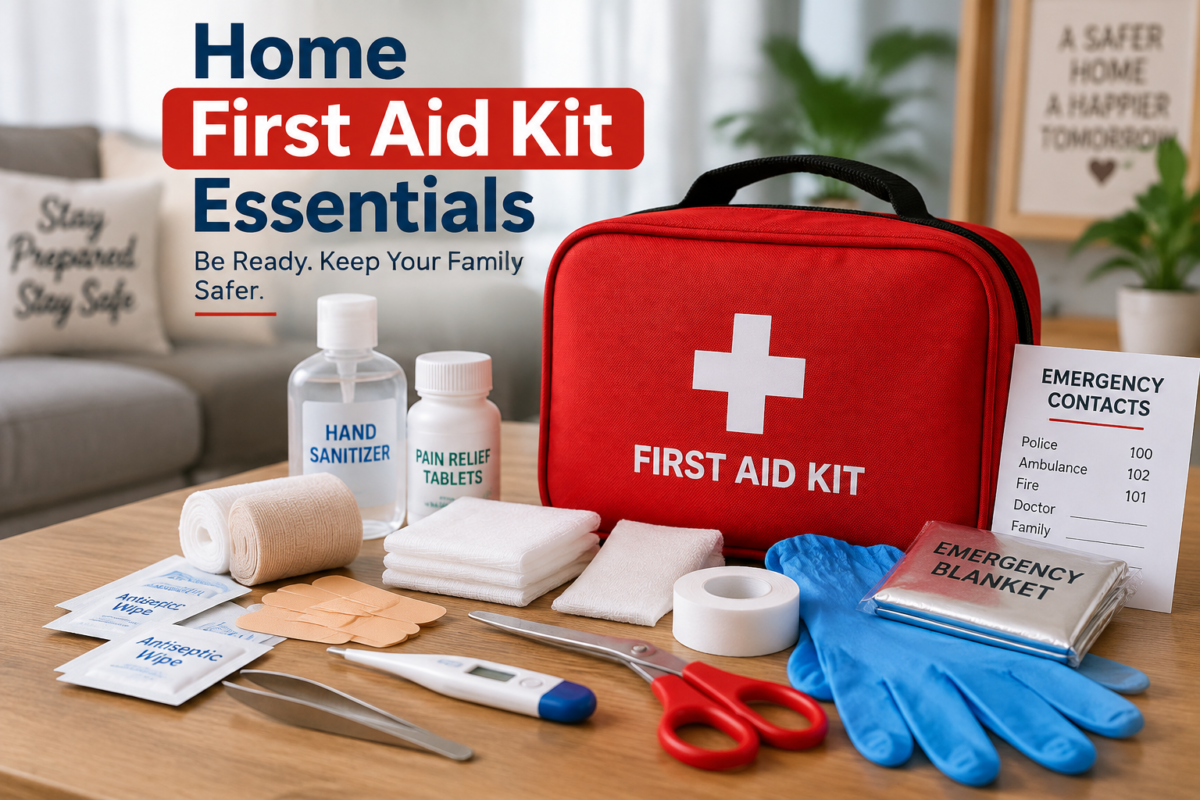
Home First Aid Kit Essentials: What Every Family Should Keep Ready
A small injury, sudden illness, or unexpected emergency can happen at any time. Having a well-prepared home first aid kit can help you respond quickly and provide basic support while waiting for professional medical help if needed.
A first aid kit does not replace doctors or emergency services. Its purpose is to help manage minor injuries, provide immediate care, and keep important supplies available when every minute matters.
Many families only think about first aid supplies after an accident happens. Preparing a kit in advance can make it easier to stay calm and take the right steps during stressful situations.
Why Every Home Needs a First Aid Kit
A home first aid kit is useful for everyday situations such as:
Small cuts and scratches
Minor burns
Sprains and strains
Splinters
Nosebleeds
Minor allergic reactions
Fever or common health concerns
During larger emergencies, a first aid kit can also provide useful supplies until emergency responders arrive.
For example, if someone experiences severe bleeding after an accident, having clean gauze and disposable gloves available can help you provide safer assistance while waiting for medical help.
You can also learn more about controlling serious bleeding in our guide on Basic Bleeding First Aid: Simple Steps to Help Someone.
Essential Items Every Home First Aid Kit Should Include

A useful first aid kit does not need to be complicated. It should contain basic supplies that help with common injuries and emergencies.
Bandages and Wound Care Supplies
These are some of the most important items to keep ready:
Adhesive bandages in different sizes
Sterile gauze pads
Medical tape
Antiseptic wipes
Clean cotton pads
Elastic bandages for support
Non-stick dressings
These supplies can help protect wounds, control minor bleeding, and keep injuries covered until they heal or receive further care.
Disposable Gloves
Disposable gloves are an important safety item.
They help create a barrier between your hands and another person’s blood or body fluids during first aid situations.
Keep several pairs in your kit because more than one person may need assistance during an emergency.
Scissors and Tweezers
Basic tools can make first aid easier.
Useful tools include:
Small medical scissors for cutting tape or dressings
Tweezers for removing small splinters
Safety pins for securing bandages
A small flashlight for emergencies
Keep tools clean and stored safely.
Thermometer
A thermometer can help monitor body temperature during illness.
It may be useful when someone has:
Fever
Infection symptoms
Flu-like symptoms
Other health concerns
Knowing a person’s temperature can provide helpful information when deciding whether medical advice is needed.
Basic Health and Safety Items
Some additional items can make your first aid kit more complete.
Consider including:
Instant cold packs for swelling or minor injuries
Emergency blanket for keeping someone warm
Face masks for hygiene protection
Hand sanitizer
Saline solution for cleaning around the eyes or skin
A small notebook and pen for recording important details
CPR breathing barrier or face shield to help provide rescue breaths during CPR, if trained and appropriate.
A simple kit that is organized and easy to access is often more useful than a large kit with items nobody can find.
Keep Emergency Information Nearby
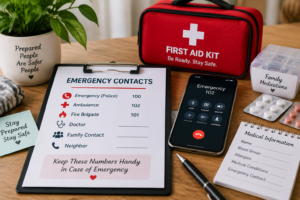
A first aid kit should include important information that may be needed during an emergency.
Consider keeping:
Emergency phone numbers
Family medical information
Allergies and important health details
Contact information for doctors or caregivers
Local emergency service numbers
During stressful situations, people may forget important details. Having this information written down can save time.
Medicines to Consider Keeping
Some families choose to keep common over-the-counter medicines in a separate section.
Examples may include:
Pain relievers
Allergy medicines
Basic fever medicines
Medicines recommended by a healthcare professional
Always check medicine labels, expiration dates, and storage instructions.
Do not keep prescription medicines that are not needed or not prescribed for someone in your household.
Keep medicines in their original packaging and follow the label’s storage instructions. Store all medicines securely out of the reach of children. Use medicines only as directed, and check with a healthcare professional if you are unsure which medicine is appropriate for a family member.
Items People Often Forget in a First Aid Kit
Many people remember bandages but forget other useful supplies.
Commonly forgotten items include:
Extra Gloves
One pair of gloves may not be enough during a larger emergency.
Keeping extra pairs can help maintain hygiene.
Emergency Contact List
Many people save numbers on their phones but may not be able to access their device during an emergency.
A written list is a helpful backup.
Flashlight and Batteries
Power outages can happen during storms, accidents, or emergencies.
A small flashlight can help you find supplies safely.
First Aid Instructions
A simple first aid guide can help you remember basic steps when you feel stressed.
Learning basic emergency responses before an incident happens can improve confidence.
Where Should You Store a Home First Aid Kit?
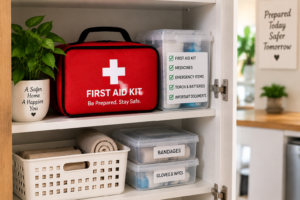
The location of your kit matters.
Keep it:
In an easy-to-reach place
Away from young children
Protected from moisture and extreme heat
Clearly labeled
Good locations may include:
Kitchen cabinet
Bathroom storage area
Bedroom closet
Emergency supply area
Avoid storing your first aid kit somewhere difficult to access.
During an emergency, searching for supplies wastes valuable time.
How Often Should You Check Your First Aid Kit?
A first aid kit should be checked regularly.
Review your supplies every few months and:
Replace expired medicines
Replace used bandages
Check that tools are working
Remove damaged items
Add supplies based on your family’s needs
A forgotten kit may not be useful when an emergency happens.
Creating a Car First Aid Kit
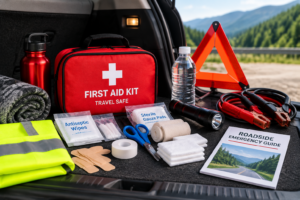
A small first aid kit in your vehicle can also be helpful. You can learn more about basic first aid preparedness from the American Red Cross.”
A car kit may include:
Disposable gloves
Gauze pads
Bandages
Medical tape
Emergency blanket
Flashlight
Basic first aid instructions
Road accidents can happen unexpectedly, and having basic supplies available can help you provide safer assistance.
You can also read our guide on Road Accident First Aid: Simple Steps to Help Someone for more information about responding after a crash.
Common First Aid Kit Mistakes
Keeping Expired Supplies
Old medicines and damaged supplies may not work properly.
Check dates regularly.
Storing the Kit Too Far Away
A first aid kit that cannot be reached quickly is less useful.
Not Knowing What Is Inside
Everyone in the household should know where the kit is stored and what it contains.
Adding Too Many Unnecessary Items
A useful kit does not need to contain everything. Focus on practical items you know how to use.
Forgetting to Replace Used Supplies
After using items, replace them so the kit stays ready.
Frequently Asked Questions
What is the most important item in a home first aid kit?
There is no single most important item. Basic supplies such as gloves, gauze, bandages, and medical tape are commonly useful for many situations.
How big should a home first aid kit be?
The size depends on your family’s needs, but it should contain essential supplies and remain easy to store and access.
Should children have access to a first aid kit?
Children should learn basic safety, but medicines and sharp tools should be stored safely away from young children.
Can a first aid kit replace emergency care?
No. A first aid kit only provides basic support. Serious injuries and emergencies require professional medical help.
Where should I keep emergency numbers?
Keep them in your phone and also written near your first aid supplies as a backup.
Final Thoughts
A prepared home first aid kit can help families respond better during everyday injuries and unexpected emergencies.
The goal is not to treat every medical problem at home. The goal is to have basic supplies ready, stay calm, and provide safe support until further help is available.
Taking a few minutes to prepare a first aid kit today can make a big difference when someone needs help tomorrow.
A little preparation can help protect the people who matter most.